 How-to
How to Assess Ranch Land Investment Potential
Last Updated: October 23, 2026
Quick Summary
To assess ranch land investment, evaluate location and market access, analyze physical characteristics and usable acreage, verify water availability and rights, complete thorough due diligence on title and easements, calculate revenue potential against operating costs, and compare recent comparable sales to determine fair market value.
- Location determines economics: a ranch 30 minutes from a regional market has different value than one two hours away.
- Usable acreage matters more than total acreage; terrain, soil quality, and vegetation determine actual grazing capacity and revenue.
- Water rights are often separate from land ownership and may be senior or junior in priority, affecting long-term reliability and value.
- Build a repeatable financial model with purchase price, operating expenses, income, financing, and resale assumptions to calculate cap rate and cash-on-cash return.
- Compare 3-5 recent arm's-length sales of similar properties to identify fair market value and detect overpricing.
Table of Contents
- Step 1: Evaluate Location and Market Access
- Step 2: Analyze Physical Land Characteristics and Usable Acreage
- Step 3: Assess Water Availability and Rights
- Step 4: Complete a Ranch Property Due Diligence Checklist
- Step 5: Calculate Revenue Potential and Operating Costs
- Step 6: Compare Comparable Sales and Market Value
- Understanding Ranch Land Tax Exemptions and Land Improvement ROI
- Frequently Asked Questions
Step 1: Evaluate Location and Market Access
To assess ranch land investment properly, location is the foundation, its position relative to markets, population centers, and infrastructure.
A ranch 30 minutes from a regional market has different economics than one two hours away, affecting livestock movement, services, and resale.
Growing areas support higher land values; declining regions offer cheaper entry but carry resale risk.
Existing easements and right-of-way agreements can restrict land use or require maintaining access for others; multiple easements may lower price but limit control.
Key location factors to evaluate:
- Distance to nearest town or city
- Road quality and access (paved vs. gravel)
- Proximity to utilities (power lines, water infrastructure)
Step 2: Analyze Physical Land Characteristics and Usable Acreage
Listing acreage doesn't tell you how much land you can actually use. Terrain, vegetation, and soil quality determine usable acreage and revenue potential.
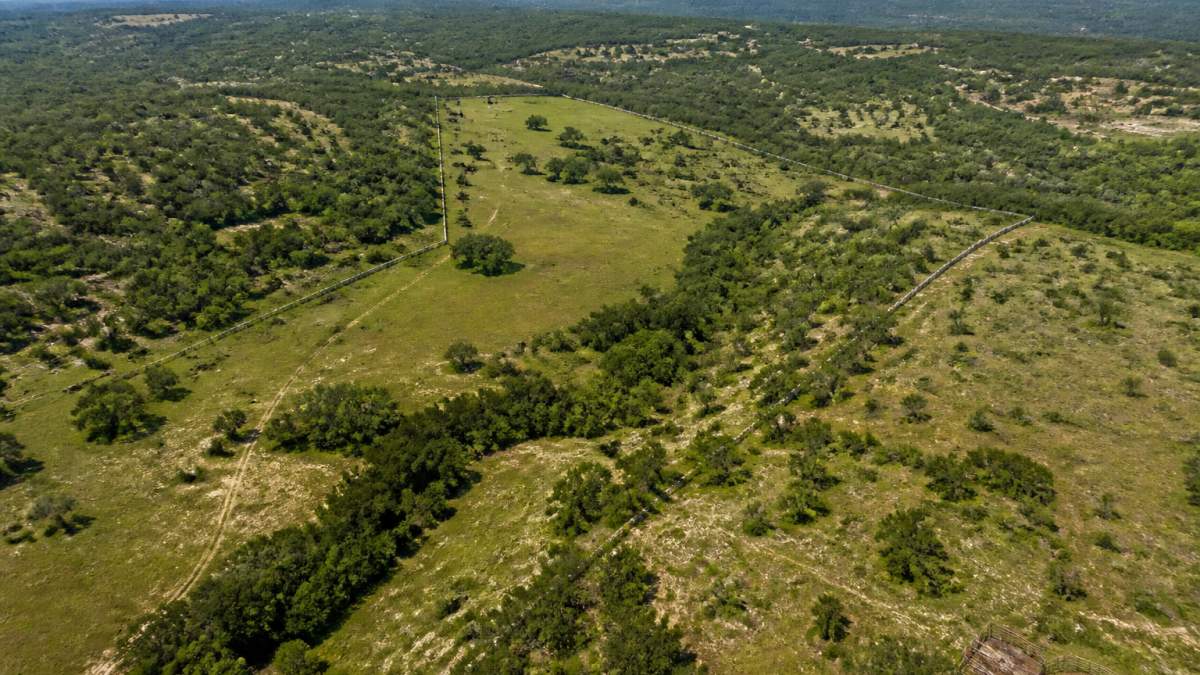
Walk the property or hire an assessor.
Native grasses indicate good grazing land; dense brush suggests lower productivity. Ask a local rancher or extension office about carrying capacity.
Sandy soils drain quickly but hold less water; clay retains moisture but can waterlog.
Physical characteristics to document:
- Total acreage vs. usable acreage
- Slope and elevation changes
- Vegetation type and condition
Many buyers overpay for acreage they can't use. Usable acreage is what matters for investment return.
Step 3: Assess Water Availability and Rights
Abundant, reliable water makes a ranch property worth significantly more.
Identify water sources: springs, wells, creeks, or ponds.
Municipal water is more reliable but may carry fees; private wells depend on fluctuating groundwater.
Some jurisdictions limit withdrawal or prohibit uses like irrigation, affecting revenue potential.
Water assessment checklist:
- Type of water source (well, spring, creek, municipal)
- Water rights status and seniority
- Seasonal reliability
Water rights disputes are common in rural property. Get a legal review before you commit to a purchase.
Step 4: Complete a Ranch Property Due Diligence Checklist
Most buyers check title and stop; a thorough ranch review goes further into water rights, mineral rights, easements, leases, permitted uses, and long-term resource risk, where the largest surprises hide.
Title, survey, and boundary verification
Hire a title company to search for liens, easements, boundary disputes, and other claims; title insurance protects you if problems emerge after purchase.
A professional survey confirms boundaries and reveals encroachments. It commonly costs a few hundred to under a thousand dollars depending on acreage and terrain, but prevents costly disputes. Compare it to the legal description and long-standing fence lines.
Water rights and water reliability
Water is the most litigated ranch resource. Verify, in writing:
- Source and type: well, spring, creek, pond, or municipal. Identify the point of diversion and the place of use.
- Rights status: whether water rights are appurtenant to the land or separately held, and whether they are senior or junior in priority.
- Permits and records: state water agency records, permits, and any adjudicated rights. Confirm the property's rights are documented, not just assumed.
Water rights disputes are common in rural property. Get a legal review before you commit to a purchase.
Mineral rights and subsurface interests
Mineral rights are separate from surface rights and may let others extract oil, gas, or minerals beneath the property. Confirm whether they're included, partially reserved, or severed entirely, and review existing leases, surface-use agreements, and pooling arrangements.
Easements, rights-of-way, and access
Review every recorded easement and right-of-way. Confirm legal access, not just physical, and whether it's by deeded right, prescriptive use, or revocable permission.
Leases and tenant arrangements
If the property is leased for grazing, hunting, or farming, review terms, renewal dates, and rights of first refusal. A lease running past closing may bind you to terms you didn't negotiate; confirm who owns deposits, improvements, and equipment.
Zoning, land use, and permitted uses
Check county and state zoning and land-use rules. Confirm current and intended uses, livestock, hunting, recreation, agritourism, or conservation, are allowed, whether agricultural exemptions transfer, and any conservation easements or deed restrictions limiting use or subdivision.
Environmental and resource risk
Environmental assessments reveal contamination, hazardous waste, or restrictions from past industrial use. Also assess long-term resource risk:
- Drought: historical precipitation and drought records, and whether water sources have failed in past dry cycles.
- Wildfire: local fire history, fuel load, defensible space, and insurance availability.
- Flooding: floodplain maps and drainage patterns.
Use public data, county records, state water agency databases, federal climate and drought monitors, and satellite imagery, to validate the seller's claims.
Connect with Monica Allison now. →
Buildings, fences, and infrastructure
Inspect barns, fences, water systems, and roads. Repair costs can run high, so understand what you're inheriting, budget accordingly, and document every improvement's condition.
Due diligence checklist:
- Title search and insurance
- Professional property survey and boundary review
- Water rights verification and reliability records
Step 5: Calculate Revenue Potential and Operating Costs
An investment property must generate income or have clear appreciation potential. Most ranch buyers stop at a rough revenue-minus-cost estimate instead of building a repeatable underwriting model, the difference between a hobby purchase and an investment decision. Combine purchase price, operating expenses, income, financing, and resale assumptions into one process you run on every property.
Build the income side first
For livestock, estimate grazing capacity using a local rule of thumb (acres per animal unit), then price the output:
- Grazing lease income: acres ÷ acres-per-animal-unit × lease rate per animal unit per month × 12.
- Hunting or recreational lease: annual fee per acre or per tract, often negotiated seasonally.
- Hay or crop income: yield per acre × price per ton or bushel, minus harvest cost.
Example: a 100-acre property carrying one animal unit per 5 acres has 20 animal units. At $25 per animal unit per month, gross grazing income is 20 × $25 × 12 = $6,000 per year. Add a hunting lease at $15 per acre ($1,500) for $7,500 total. Replace these illustrative figures with local rates before relying on them.
List every operating cost
Operating costs are easy to underestimate. Build a line-item budget covering:
- Property taxes (check the agricultural or open-space exemption status first)
- Insurance (liability, structures, and any specialized coverage)
- Fence and gate maintenance
For the same 100-acre example, assume annual operating costs of $5,500. Net operating income (NOI) is $7,500 − $5,500 = $2,000.
Convert NOI into investment metrics
NOI alone doesn't tell you whether the deal is good. Convert it into the metrics investors compare:
- Cap rate = NOI ÷ purchase price. At a $500,000 purchase price, a $2,000 NOI produces a 0.4% cap rate, a signal that the deal is being priced on appreciation or lifestyle value, not income.
- Cash-on-cash return = annual pre-tax cash flow ÷ total cash invested. If you finance 70% of the price and put down $150,000 plus $10,000 in closing costs, your cash invested is $160,000. If debt service is $18,000 per year and NOI is $2,000, pre-tax cash flow is negative $16,000, a negative cash-on-cash return that must be covered by appreciation or outside income.
- Break-even price = the purchase price at which NOI just covers debt service and operating costs. Solve for price using your target cap rate or debt coverage ratio. This tells you the maximum you can pay before the property stops paying for itself.
Run the model on every property
A repeatable model has five inputs: purchase price, operating expenses, income, financing terms, and resale assumptions. Change one at a time and watch the metrics move. A property marginal at a 0.4% cap rate may become attractive with a hunting lease, brush reduction, or lower price; a strong-income property may fail the IRR test once deferred maintenance and realistic time-to-sale are included.
Revenue and cost factors:
- Grazing capacity and livestock market prices
- Lease income potential (grazing, hunting, recreation)
- Property tax burden and exemption status
Many ranch properties don't generate strong annual income; they're valued for appreciation and lifestyle. Know which you're buying, and run the numbers before you fall in love with the view.
Step 6: Compare Comparable Sales and Market Value
Market value is what similar properties sold for recently.
Search recent sales of similar ranches in the same area, similar size, quality, location, and water availability.
Calculate price per acre for each comparable.
Rising prices may justify a higher offer; declining prices suggest waiting or negotiating harder.
Comparable sales analysis:
- Identify 3-5 similar recent sales
- Calculate price per acre for each
- Adjust for property differences
A property that seems overpriced versus recent sales is a red flag. Comparables keep you from overpaying.
Understanding Ranch Land Tax Exemptions and Land Improvement ROI
Many states offer tax exemptions or reductions for agricultural land, which can significantly improve investment returns.
Agricultural exemptions typically reduce property taxes if the land is actively farmed or ranched.
Eligibility varies by state and county, some require minimum acreage, others minimum annual income.
Land improvements, fencing, wells, roads, buildings, can increase value and productivity.
Not all improvements pay off.
Tax and improvement considerations:
- Agricultural exemption eligibility and requirements
- Annual tax savings from exemptions
- Cost of land improvements
Work with a local tax professional who understands agricultural property.
To assess ranch land investment potential requires looking beyond the acreage number. At Monica Allison, realtor, we help investors evaluate ranch properties across the Texas Hill Country with deep knowledge of water rights, market trends, and local land values. The right ranch property can generate income and appreciate over time, but only if you assess it thoroughly before you buy. The USDA's guidance on evaluating agricultural land value and local county extension offices provide free resources for property analysis.
Frequently Asked Questions
How do I calculate the ROI on a ranch property investment?
Start by projecting annual net income (gross revenue minus operating costs). Divide net income by your total investment to get your annual return percentage. For example, if a $500,000 property generates $25,000 in net income annually, your ROI is 5%. Also factor in property appreciation, tax benefits, and financing costs. The 2% rule suggests monthly rental income should equal 2% of purchase price; for ranches, compare your projected annual net income against the purchase price using the same logic.
What does the 7% rule mean for ranch land investment potential?
The 7% rule suggests that a property's annual return should be at least 7% of your total investment to justify the purchase. If you invest $400,000, aim for at least $28,000 in annual net income. This threshold accounts for risk, financing costs, and opportunity cost. However, ranch investments often trade higher returns for long-term appreciation and tax benefits, so some investors accept lower annual returns if land value growth and tax advantages justify the purchase.
What factors influence the valuation of rural ranch land?
Location relative to markets and population centers, water availability and rights, soil quality and vegetation type, usable acreage and topography, access and road infrastructure, zoning and regulatory restrictions, comparable recent sales, and income-generating potential all affect value. Proximity to markets increases value for commercial operations. Water reliability is often the single largest value driver. Tax exemptions for agricultural use and potential for recreational income also influence what buyers will pay.
Is ranch land a good investment compared to other real estate?
Ranch land can offer strong long-term appreciation, tax benefits through agricultural exemptions, and diversification from residential real estate. However, returns depend heavily on location, water access, and management. Ranch investments typically require more due diligence than residential properties and may have lower annual cash flow. They work well for investors with patience, capital, and interest in land stewardship or agricultural operations. Compare projected returns against your investment timeline and risk tolerance before committing.