 how-to
Evaluating Ranch Land Business Potential: A 2026 Guide
Table of Contents
- Evaluating Ranch Land Business Potential: Core Assessment Framework
- Water Rights and Availability: The Foundation of Ranch Value
- Factors Affecting Ranch Land Value and Income Generation
- Ranch Land Profitability Checklist: What to Evaluate Before Buying
- Ranch Management Best Practices for Long-Term Success
- Tax Implications and Climate Risk in Ranch Ownership
- Due Diligence: Structural, Title, and Easement Inspection
- Conclusion
- Frequently Asked Questions
Last Updated: September 28, 2026
Evaluating Ranch Land Business Potential: Core Assessment Framework
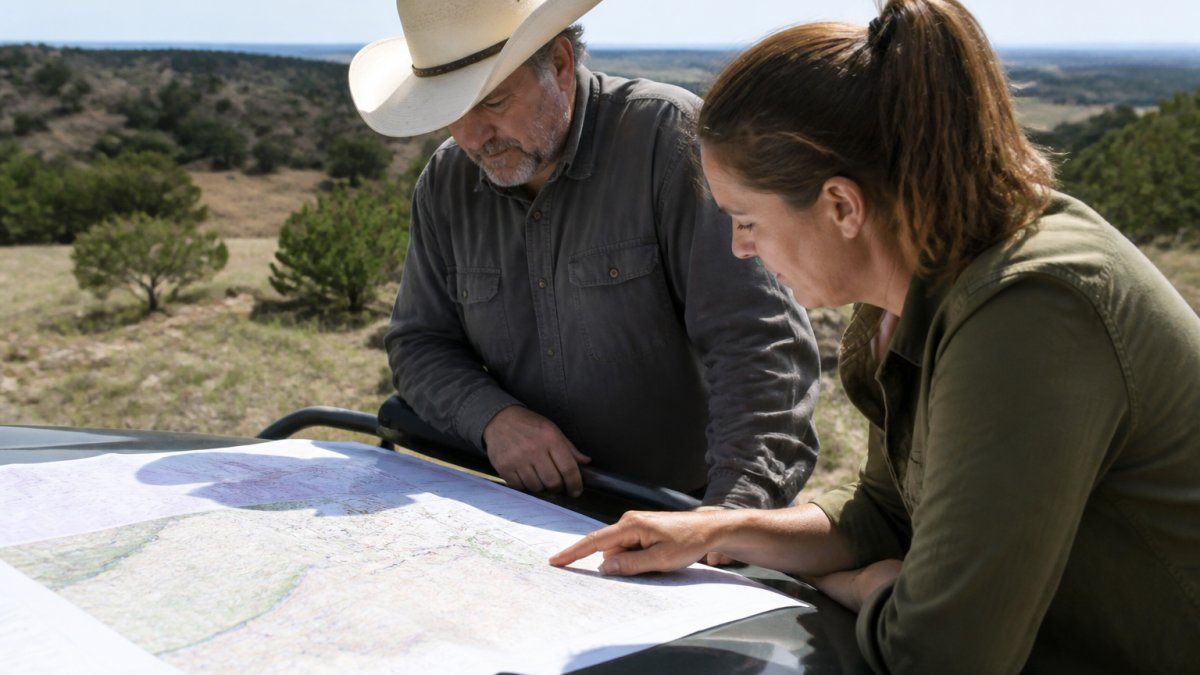
Evaluating ranch land business potential requires analyzing water rights, soil quality, infrastructure, zoning, market value, and income potential. Most buyers focus only on acreage and price per acre, missing critical factors that determine viability.
Each factor influences the others: excellent water rights cannot overcome poor soil productivity, and strong agricultural production means nothing under severe zoning restrictions.
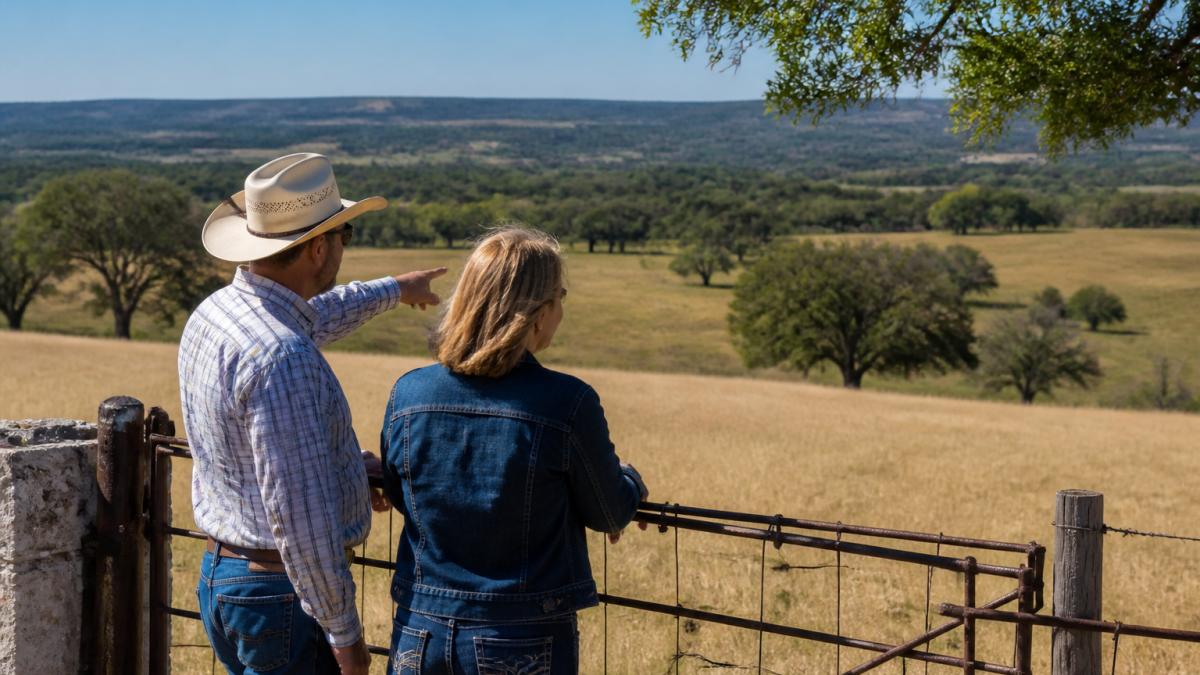
Define your intended use first, livestock production, hunting, residential retreat, or asset appreciation, as this shapes every evaluation decision.
Water Rights and Availability: The Foundation of Ranch Value
Water rights represent the most critical asset on any ranch. Without reliable water access, agricultural productivity plummets, livestock operations fail, and property value collapses.
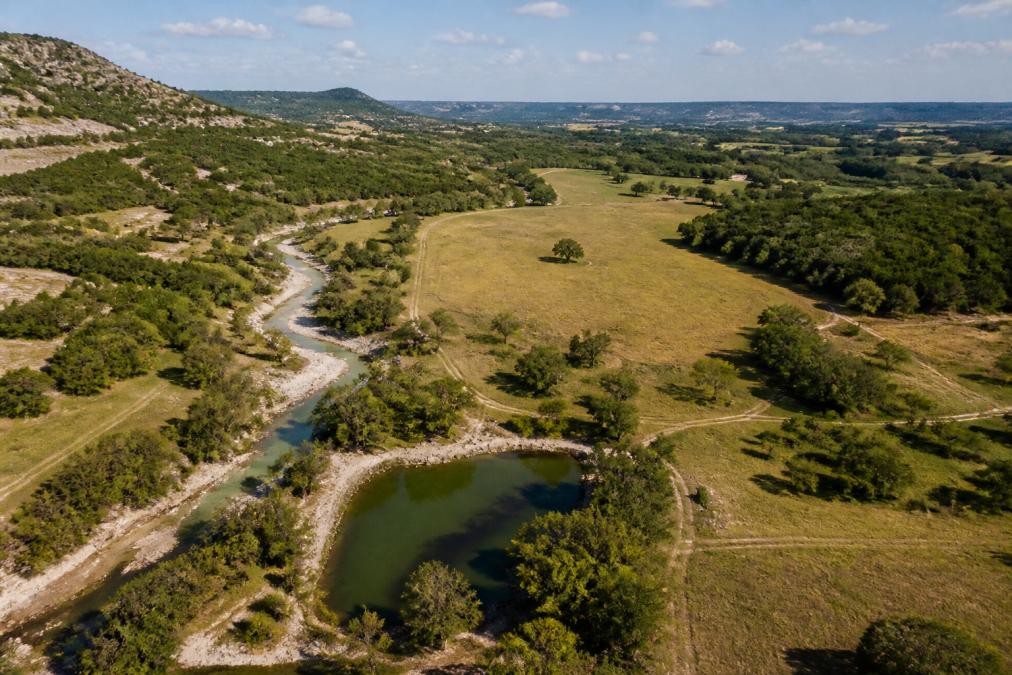
Water rights systems vary by state: riparian rights (landowner access to adjacent water), prior appropriation (first-use priority), or hybrid systems. Understand which applies to your property.
Before purchasing, determine what water sources exist, whether rights are included in the deed, if shared agreements exist, historical drought availability, and groundwater reliability. Many buyers discover too late they own land but not the water beneath it.
Factors Affecting Ranch Land Value and Income Generation
Soil Productivity and Carrying Capacity
The NRCS assigns productivity ratings determining carrying capacity (animal units per acre). Highly productive rangeland supports 5-8 acres per AU; marginal land requires 15-25 acres per AU. A 1,000-acre property at 10 acres per AU sustains 100 cattle, generating roughly $40,000-$60,000 annual gross revenue. Obtain free NRCS soil surveys and cross-reference with historical grazing records rather than relying on seller claims.
Location, Access, and Operational Proximity
Properties within 30 miles of livestock markets command 10-15% premiums; remote properties sell at 20-30% discounts reflecting real operational costs. Properties requiring 45+ minutes to reach essential services see 15-25% value reduction. Map distance to livestock facilities, veterinary clinics, feed suppliers, highway access, and utilities.
Infrastructure Condition and Replacement Cost
Existing infrastructure reduces startup costs, but age matters. A 40-year-old barn may need $50,000-$100,000 in repairs. Estimate replacement costs: fencing $1,500-$3,000/mile, barns $50-$150/sq ft, wells $3,000-$15,000, roads $500-$2,000/mile annually, handling facilities $10,000-$50,000. Factor these into your offer.
Market Comparables and Price Per Acre Analysis
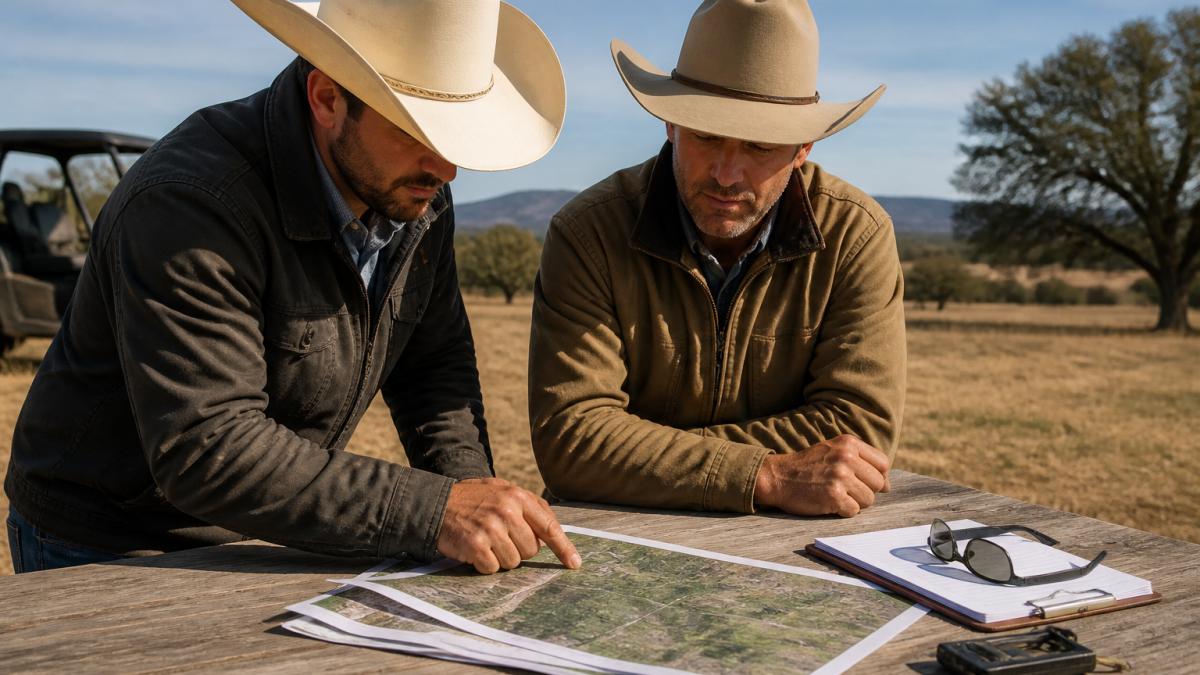
Rangeland prices range from $500-$1,500/acre in less-productive areas to $3,000-$8,000+/acre in high-demand regions. Never rely on price per acre alone; calculate price per animal unit of carrying capacity instead. Obtain recent comparable sales adjusted for soil productivity, water availability, infrastructure, distance to services, and zoning.
Income Potential Beyond Livestock
Evaluate supplemental revenue: hunting leases ($5-$25/acre annually), grazing leases ($0.50-$2.00/acre monthly), conservation partnerships, timber value, and agritourism. Calculate total income across all streams to reveal underutilized opportunities.
Ranch Land Profitability Checklist: What to Evaluate Before Buying
Use this checklist when evaluating ranch land business potential for income generation:
Water and Natural Resources
- Verify water rights are included in the deed
- Test well water quality and volume if applicable
- Document historical water availability during drought
- Check for shared water agreements or disputes with neighbors
- Confirm irrigation capability if needed for your operation
Soil and Productivity
- Obtain soil survey and productivity ratings
- Verify carrying capacity for livestock type you plan to raise
- Test soil pH, nutrients, and contaminants
- Assess drainage and erosion risk
- Determine native grass species and forage quality
Infrastructure and Improvements
- Inspect all structures (barns, sheds, fencing, gates)
- Evaluate road access and maintenance requirements
- Assess electrical and water system condition
- Document age and repair status of improvements
- Estimate replacement cost for major systems
Zoning and Legal Restrictions
- Confirm property zoning allows your intended use
- Review any conservation easements or deed restrictions
- Check for access easements benefiting neighboring properties
- Verify mineral rights ownership and any lease agreements
- Research pending zoning changes in the area
Market and Financial Factors
- Compare price per acre to recent comparable sales
- Calculate potential income from agricultural production
- Project operating costs (feed, labor, equipment, maintenance)
- Estimate property tax liability
- Research long-term appreciation potential in the area
Environmental and Climate Considerations
- Review flood risk and historical weather patterns
- Assess wildfire risk and defensible space
- Evaluate climate change impact on water availability
- Check for environmental contamination or hazards
- Document wildlife habitat value and recreational potential
Ranch Management Best Practices for Long-Term Success
Develop a resource inventory documenting water, soil, vegetation, wildlife, topography, and infrastructure. Implement rotational grazing to improve soil health and carrying capacity. Monitor water continuously and adjust stocking rates during drought. Maintain fences and infrastructure to prevent costly repairs. Keep detailed financial records and review profitability annually. Manage for wildlife habitat to attract hunting leases and conservation partnerships.
Connect with Monica Allison now. →
Tax Implications and Climate Risk in Ranch Ownership
Tax Benefits and Liability Structures
Ranch ownership creates complex tax implications that significantly impact long-term profitability. Most buyers overlook these until after purchase, missing opportunities to structure ownership optimally.
Many states offer reduced property tax assessments for active agricultural use, requiring minimum acreage (5-40 acres), documented income ($1,000-$5,000 annually), and continuous use (3-5 years). Failure to qualify increases taxes 50-200%. Some states impose rollback taxes for conversion to non-agricultural use. Verify your state's requirements before purchasing.
Long-term capital gains (property held >1 year) receive preferential federal rates (0%, 15%, or 20%) versus ordinary income rates up to 37% (Topic no. 409, Capital gains and losses). A $250,000 gain at 15% costs $37,500 versus $92,500 at 37%, a critical difference. Heirs receive stepped-up basis at death, eliminating capital gains taxes on lifetime appreciation, making ranch land valuable for estate planning.
Conservation easements restrict development, reducing property value and creating tax deductions. A 500-acre ranch worth $2 million might drop to $1.2 million with an easement; the $800,000 reduction becomes a charitable deduction saving $296,000 in federal taxes at 37% rate. Easements are permanent but provide immediate tax benefits and may qualify for state credits.
Buildings and equipment depreciate over time, reducing taxable income: residential structures over 27.5 years, agricultural structures over 20 years, equipment over 5-7 years. A $100,000 barn depreciates $5,000 annually, creating $100,000 in deductions over 20 years and saving $37,000 in federal taxes at 37% rate. Work with a tax professional to avoid IRS penalties.
Climate Change and Long-Term Water Security Risk
Climate change poses existential risk to ranch viability in many regions. This is not a distant concern, it affects property value and income potential today.
Drought Frequency and Severity Trends
Historical drought patterns no longer predict future water availability. The Colorado River Basin experienced a 20-year megadrought (2000-2020), the driest in 1,200 years, dropping Lake Mead and Powell to historic lows. Before purchasing, research historical drought frequency, projected precipitation through 2050-2100, groundwater depletion rates, and your water source's priority during shortage.
Groundwater Depletion and Well Reliability
Many ranches rely on groundwater from aquifers that are being depleted faster than they recharge.
If your property relies on well water, obtain:
- Current well depth and water table elevation
- Historical water table data (if available from state water agency) showing whether levels are rising or falling
- Estimated aquifer recharge rate and depletion rate
- Neighboring well performance data (ask local ranchers about well productivity trends)
Wildfire Risk and Infrastructure Vulnerability
Evaluate wildfire risk by:
- Reviewing historical fire perimeters in your county (available from InciWeb and state forestry agencies)
- Assessing defensible space around structures (typically 30-100 feet of cleared vegetation)
- Checking whether the property is in a high-risk fire zone according to state or county assessments
- Evaluating vegetation type and fuel load (dense brush and dead trees increase risk)
Climate Resilience and Adaptive Management
Properties with climate resilience features command premium value and lower operational risk:
- Diverse water sources (surface water, groundwater, rainwater capture) reduce dependence on any single source
- Native vegetation adapted to local climate requires less water and maintenance
- Rotational grazing systems improve soil water retention and forage resilience
- Riparian restoration increases water infiltration and reduces runoff
Due Diligence: Structural, Title, and Easement Inspection
Thorough due diligence prevents costly surprises after purchase. Many rural property problems remain hidden until you own the land.
Conclusion
Evaluating ranch land business potential requires careful analysis across multiple dimensions. Water rights, soil quality, infrastructure, zoning, market value, and income potential all factor into the decision. Climate risk and tax implications shape long-term viability. Thorough due diligence prevents costly mistakes.
Frequently Asked Questions
What are the most important factors affecting ranch land value?
Water rights, soil quality, topography, access, and zoning are the primary drivers. Water availability determines carrying capacity for livestock. Soil quality affects agricultural productivity and native grass health. Elevation and terrain impact infrastructure costs and usable acreage. Access easements and road conditions affect property accessibility. Zoning regulations determine what income-generating activities are permitted. Market value per acre varies significantly based on these combined factors and local demand.
How do I use a ranch land profitability checklist when evaluating properties?
Review water rights documentation and volume availability. Assess soil composition and current vegetation. Calculate carrying capacity for your intended livestock or agricultural production. Estimate infrastructure costs for fencing, water systems, and structures. Research zoning restrictions and permitted uses. Verify mineral rights ownership and conservation easement terms. Evaluate market comparables for similar acreage in the area. Project 3-5 year income potential based on commodity prices and operational costs. This systematic approach prevents overpaying and identifies hidden liabilities before purchase.
What tax implications should I consider when buying ranch land?
Property tax exemptions may apply if the land qualifies for agricultural use classification under state law. Capital gains tax treatment differs between investment property and primary residence. Operating losses in early years may offset other income. Conservation easements can provide tax deductions but restrict future development. Depreciation schedules apply to structures and equipment, not land itself. Consult a tax professional familiar with agricultural property to understand your specific situation and plan accordingly.
How does climate change and drought risk affect ranch land business potential?
Long-term drought patterns impact water availability and carrying capacity for livestock operations. Historical precipitation data and groundwater depth should inform your income projections. Properties with reliable surface water or deep wells have greater resilience. Drought-resistant native grasses and rotational grazing practices reduce vulnerability. Insurance costs may increase in high-risk areas. Evaluate 10-20 year weather trends and consult with local agricultural extension services about climate adaptation strategies for your intended use.