 How-to
How to Verify Water Rights on Texas Ranch Land
Table of Contents
- Step 1: Understand What Water Rights You Are Actually Buying
- Step 2: Pull the Deed and Title Records for Water Rights
- Step 3: Review Texas Water Well Records and Well Logs
- Step 4: Check Texas Surface Water Rights and Permits
- Step 5: Research Groundwater Conservation District Rules
- Your Water Rights Due Diligence Checklist
- When to Escalate to the Texas Water Development Board and Local Experts
- Frequently Asked Questions
Last Updated: October 14, 2026
Step 1: Understand What Water Rights You Are Actually Buying
Water rights on Texas ranch land fall into two separate legal systems, and knowing which applies is the first step in how to verify water rights on Texas ranch land.
Surface water is water in a river, stream, creek, or lake. In Texas, surface water belongs to the state. A landowner needs a permit or authorization to use it.
Groundwater is water beneath the surface, pulled up through a well.
Step 2: Pull the Deed and Title Records for Water Rights
Start with the deed, then work backward through the chain of title. The deed shows what the seller actually owns, and water rights are often the first thing separated from the land years ago.
How to Check Whether Water Rights Transfer With the Land
Water rights transfer with the land only if they were never severed from it. Look for these terms in the deed and prior conveyances:
- "Together with all water rights appurtenant hereto"
- "Reserving all groundwater rights"
- "Mineral and water rights previously severed"
If you see a reservation, the seller may not own the water at all. Pull the earlier instrument it references, severed water rights are common on rural property.
Check the title commitment and any exceptions listed by the title company. Ask the title officer directly whether water rights are included or excluded. Get the answer in writing.
Step 3: Review Texas Water Well Records and Well Logs
Texas water well records are public and tell you more than any seller disclosure. The Texas Water Development Board maintains a searchable well database by county, owner name, or location.
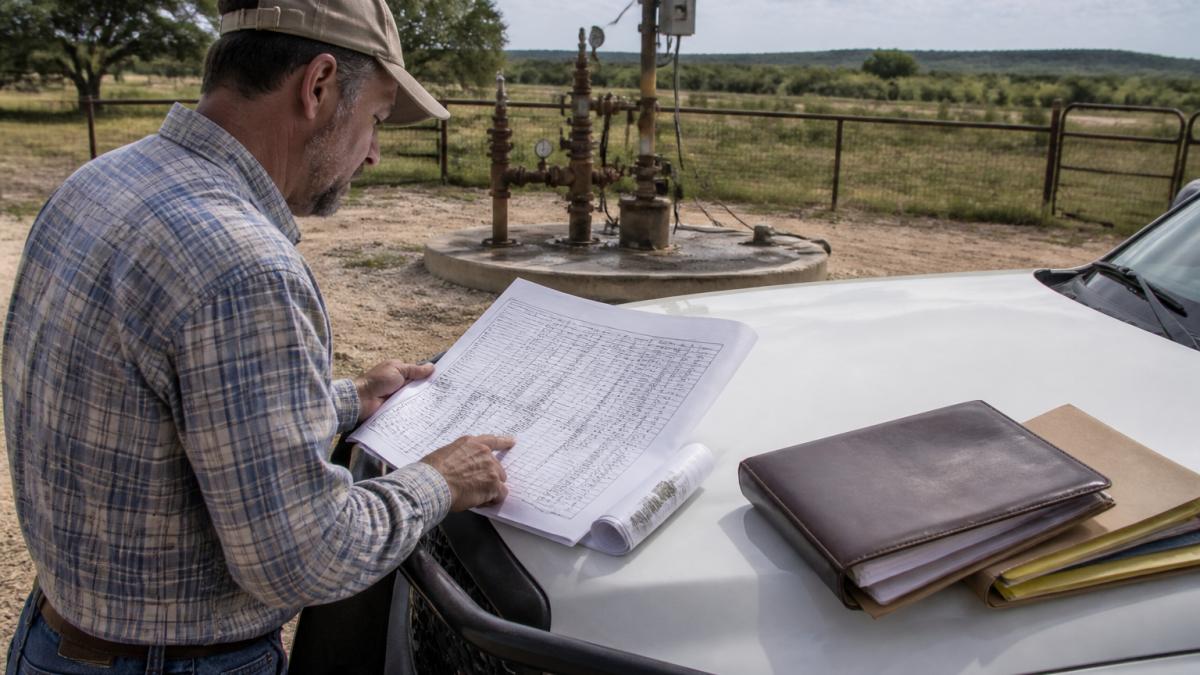
A well log is the driller's record of what was found underground: depth, casing, water level, and yield. Here is what to confirm:
- Well depth and casing size
- Reported yield in gallons per minute
- Static water level at the time of drilling
A well log is a snapshot, not a guarantee, a well that produced well years ago can drop off during drought. Have a licensed well professional inspect the pump, pressure tank, and water quality before closing.
Step 4: Check Texas Surface Water Rights and Permits
Texas surface water rights live in a separate system from wells and are checked through the Texas Commission on Environmental Quality (TCEQ), which maintains a water rights viewer searchable by river basin, county, or permit name. The useful work is reading what the record actually says.
What a Surface-Water Permit Actually Authorizes
A surface-water right is not a blanket permission to use any water on the property. It is a defined authorization with specific limits. When you pull the record, confirm each of these fields:
- Permit number and type, a regular permit, a term permit, or a temporary permit. Term and temporary permits expire; a regular permit does not.
- Priority date, the date the right was established. In a shortage, older priority dates are satisfied first. A right with a recent priority date can be curtailed to nothing in a dry year.
- Authorized use, irrigation, livestock, domestic, municipal, industrial, or recreation. A right permitted only for livestock does not authorize irrigation.
Permitted Right vs. Exempt Use vs. No Right
A creek, spring, stock tank, or reservoir does not automatically come with a right to use it. Texas law recognizes narrow permitting exemptions that buyers routinely confuse with ownership:
- Domestic and livestock use, a landowner may generally take surface water for domestic and livestock purposes without a permit, subject to limits and priority rules. This is not the same as an irrigation right.
- Stock tanks and impoundments, small impoundments constructed for livestock or wildlife may fall under an exemption, but the exemption has size and construction conditions. A large reservoir built for irrigation is a different matter.
- Diffused surface water, rainfall runoff that has not reached a defined channel is generally treated differently from water in a watercourse.
A common pattern: a ranch marketed as having "water rights" when the only water is an exempt stock tank and a domestic well, not a surface-water right you can expand, sell, or rely on for irrigation.
How to Read the Record Like a Verifier
Work through the parcel in this order:
- Search the TCEQ water rights viewer by county and by the names on the deed and prior conveyances.
- Pull every permit, certificate of adjudication, and water right that touches the parcel or its point of diversion.
- Check whether the right is active, cancelled for non-use, or in a contested case.
- Confirm the place of use matches the acreage you are buying, not a neighboring tract.
- Check whether the parcel sits in a Watermaster area, where diversions are metered and reported.
- Request the most recent annual water use report filed for the right, if one exists.
According to the Texas Commission on Environmental Quality water rights program, surface water permits are administered by the state and can be searched through the agency's public records. If the record is unclear, ambiguous, or shows a right that appears abandoned, that is a question for a water-rights attorney, not a records search.
Connect with Monica Allison now. →
Step 5: Research Groundwater Conservation District Rules
Groundwater conservation district rules decide how much water you can actually pump, and they vary widely. A groundwater conservation district is a local body that manages groundwater within its boundaries, setting production limits, requiring permits, and restricting new wells. Two ranches a few miles apart can sit in different districts with completely different rules.
Step 5a: Identify the Applicable District for the Parcel
Do not assume the district is the one named on the listing or by the seller, district boundaries do not follow county or property lines.
- Pull the parcel's legal description and acreage from the deed.
- Use the Texas Water Development Board groundwater resources district boundary maps to identify every district that touches the parcel.
- If the parcel straddles a district boundary, confirm which district has jurisdiction over the well location and the point of use.
Step 5b: Pull the District's Rules and Permit Requirements
Once you know the district, request its rules and management plan. Read for these items:
- Permit thresholds, many districts require a permit for any new well, while others exempt domestic and livestock wells below a certain production level. Confirm the threshold for the parcel's intended use.
- Production limits, districts commonly cap annual production per well or per acre. A limit that looks generous for a household can be tight for irrigation or a commercial operation.
- Spacing rules, minimum distances between wells, and between a well and property lines, roads, or other wells. Spacing can block a new well on a small or oddly shaped tract.
Step 5c: Confirm the Parcel's Permit Status
Ask the district directly, in writing, for the parcel's permit history:
- Is there an active permit on the existing well, and who is the permit holder?
- What is the permitted annual volume and authorized use?
- Are there any outstanding violations, unpaid fees, or reporting delinquencies?
A five-minute call can save you from buying land you cannot irrigate. Get the district's answers in writing and attach them to your file, staff and rules can change between contract and closing.
Your Water Rights Due Diligence Checklist
Use this checklist during your option or inspection period. Each item has a source you can pull yourself or hand to your agent.
| What to Verify | Where to Look | Why It Matters |
|---|---|---|
| Deed and water reservations | County clerk records | Confirms what transfers |
| Title commitment exceptions | Title company | Flags severed rights |
| Well log and yield | Texas Water Development Board | Shows real well history |
| Well condition and water quality | Licensed well professional | Catches failing equipment |
| Surface-water permit status | Texas Commission on Environmental Quality | Confirms legal use |
| Groundwater district rules | Local groundwater conservation district | Sets pumping limits |
| Flood zone status | FEMA flood maps | Affects use and insurance |
| Easements and access | County records and survey | Protects your water source |
- Pulled the deed and chain of title
- Confirmed whether water rights transfer
- Reviewed the well log and had the well inspected
When to Escalate to the Texas Water Development Board and Local Experts
Some questions are too technical for a records search alone. The Texas Water Development Board publishes groundwater data, district maps, and well records, and its staff can point you to the right local resource.
Escalate when you find:
- A severed water right with unclear ownership
- A district permit that needs a hearing or contested case
- A surface-water right that appears abandoned
For ownership and transfer questions, use a real estate attorney who handles rural property. For well condition, use a licensed well professional. For district permits, call the district first and ask about timelines before waiving contingencies.
At Monica Allison, realtor, we work the farm and ranch side of Texas Hill Country real estate and see these issues come up often on rural parcels. We help buyers line up the right records and the right local contacts so nothing gets missed in the option period. U.S. Geological Survey water resources also offers national groundwater data that can add context on regional water availability.
Frequently Asked Questions
How can I verify who owns water rights tied to a ranch property?
Start with the county clerk's office and pull the deed and title records for the parcel. Look for any severed water rights, easements, or reservations that might have been carved out in past transactions. Then check the Texas Water Development Board's water rights viewer for surface-water permits and review any groundwater conservation district records for well registrations. If the chain of title is unclear, hire a title company or water rights attorney to confirm ownership before closing.
What is the difference between groundwater rights and surface water rights in Texas?
Groundwater is water below the surface, and Texas law generally treats it as a property right of the landowner, subject to rules set by local groundwater conservation districts. Surface water, which includes rivers, streams, and lakes, is owned by the state and requires a permit from the Texas Commission on Environmental Quality to use. This distinction matters because a ranch might have strong groundwater access but no surface-water permit, or vice versa.
What records should I review to verify water rights before buying ranch land?
Request the deed, title commitment, and any prior water rights documents from the seller. Pull well logs and registration records from the Texas Water Development Board. Check the water rights viewer for surface-water permits. Contact the local groundwater conservation district for production limits and permit status. Review FEMA flood zone maps if the property has surface-water features. A complete water rights due diligence checklist should include all of these before you waive any contingencies.
Can drought restrictions affect water use on ranch land?
Yes. Groundwater conservation districts can impose production limits or temporary restrictions during drought conditions, and surface-water permit holders may face curtailment based on priority dates. If the ranch relies on a well for livestock or irrigation, check whether the district has a drought contingency plan and how it has been enforced in recent years. This is especially important for properties in areas with declining aquifer levels.
Buying ranch land without checking water is a gamble most buyers cannot afford to lose. Monica Allison, realtor helps buyers and sellers across the Texas Hill Country, from farm and ranch tracts to weekend getaway properties, with the local knowledge to spot water-rights issues before they become your problem. Connect with Monica Allison now to review water rights, well records, and district rules on the property you are considering.