 How-to
Cost to Extend Utilities to Raw Land in 2026
Last Updated: November 10, 2026
Quick Summary
The cost to extend utilities to raw land is the sum of several separate projects, each priced by a different contractor and governed by different rules, so no single number applies. Distance is the largest cost driver, since every utility charges by the foot, and you should price electricity, water, and septic separately and get written quotes before closing.
- Two parcels a mile apart can carry wildly different utility bills based on distance, soil, and line ownership.
- Ask each provider for its line extension allowance per meter or per mile and any refund schedule.
- Request written overhead and underground quotes, since overhead is almost always cheaper to install.
- Confirm water rights attached to the parcel before budgeting a well.
- Get any neighbor easement in writing and recorded before you close.
Table of Contents
- How to Estimate the Cost to Extend Utilities to Raw Land
- Cost to Run Electricity to Rural Land
- Water Line and Well Options for Vacant Land
- Cost to Install a Septic System
- Utility Extension Permit Requirements
- Grid Connection vs. Off-Grid Alternatives
- Planning Your Utility Extension with Monica Allison
- Frequently Asked Questions
How to Estimate the Cost to Extend Utilities to Raw Land
The cost to extend utilities to raw land is not a single number you can look up. It is the sum of several separate projects, each priced by a different contractor and governed by a different set of rules.
Here is the uncomfortable truth most listing sheets hide: two parcels a mile apart can carry wildly different utility bills. The difference is rarely the land itself. It is distance, soil, and who owns the nearest line.
Below, we walk through each utility category, the factors that move the price, and a worksheet you can take to a contractor.
Distance from Existing Infrastructure
Distance is the single largest cost driver when you extend utilities. Every utility charges by the foot, and a remote parcel multiplies every one of those feet.
A property abutting a paved road with a live power line at the fence is a very different project from a parcel accessed by a private easement a half mile off the county road. Ask the seller, or your agent, for the exact distance from the building envelope to each utility's nearest connection point. Measure it in feet, not in "close to town."
Soil, Terrain, and Site Preparation
Rocky ground changes the math. Trenching through solid limestone takes different equipment and more hours than trenching through sandy loam. Steep grades, creek crossings, and tree clearing all add labor and equipment cost.
Site preparation is where budgets quietly break. A common mistake is pricing the pipe and the wire but forgetting the access road a trenching rig needs to reach the site.
Cost to Run Electricity to Rural Land
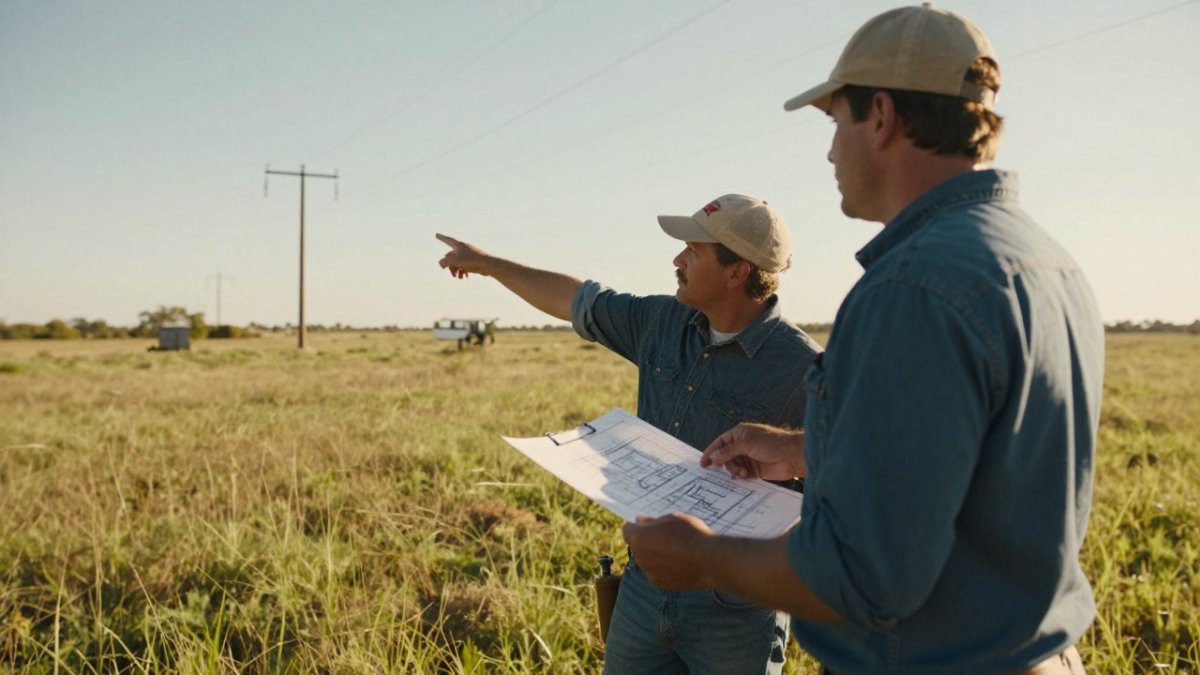
Electric service is usually the first utility a landowner pursues, and the one with the most variables. The final figure depends on your provider's line extension policy, the distance from the nearest live line, and whether the service runs overhead or underground.
How Providers Price a Line Extension
Most rural electric providers do not simply quote a flat per-foot rate. They apply a line extension policy that compares the cost of the extension against the revenue the new meter is expected to generate.
Ask the provider three questions before you budget:
- What is your line extension allowance per meter or per mile?
- Is there a reimbursement or refund schedule, and over how many years?
- Does the allowance change if the service is overhead versus underground?
A common pattern is for the customer to pay for the extension up front and receive a credit against future bills until the contribution is recovered. That changes your cash-flow math even when the total cost is the same.
Overhead vs. Underground Service
Overhead service is almost always cheaper to install because it requires less trenching and fewer materials. Underground service costs more upfront but removes storm and tree exposure from the equation. Many rural providers will quote both, and some require underground in certain subdivisions or right-of-way situations.
Request written quotes for both options before you commit. The gap can be substantial, and the cheaper choice is not always the smarter long-term one. A useful rule of thumb is to price the underground premium separately so you can decide whether the storm-risk reduction is worth it for your parcel.
Transformers, Meters, and Service Connections
Beyond the wire itself, budget for a transformer, meter base, service panel, and the connection fee your provider charges. A transformer is often the largest single line item, and its cost depends on the load your home or shop will draw.
Ask the provider who supplies the transformer and who sets the meter. Some utilities handle both; others require the customer to arrange part of the work through a licensed electrician. Confirm whether the transformer is provided at no charge as part of the extension or billed separately, because that single item can swing the budget.
Requesting a Feasibility Study
Before you sign a purchase contract, ask the serving provider for a feasibility or engineering study for the parcel.
Watch out: a quote based on the nearest visible pole can be wrong if that line belongs to a different provider, is a transmission line rather than a distribution line, or lacks capacity, confirm the serving utility and circuit before you treat any number as final.
Water Line and Well Options for Vacant Land
Water comes down to a choice: connect to a municipal or rural water system, or drill a private well. A water line connection requires a tap fee and line extension if the main is not at the property. A well requires drilling, a pump, a pressure tank, and testing.
Before you choose, confirm the water rights attached to the parcel. Review how ranch water rights are evaluated before you budget a well, and learn how to verify water rights on Texas ranch land so you are not surprised after closing.
Cost to Install a Septic System
A septic system is priced by soil type, system design, and the number of bedrooms the home will serve. A standard system on suitable soil is one project. A system requiring an engineered design, a mound, or an aerobic unit on poor soil is another, and the difference in cost is significant.
The county health department sets the rules. Before you buy, ask whether the parcel has a current soil evaluation on file. If it does not, budget for the test and design work as part of your due diligence, not as an afterthought.
Utility Extension Permit Requirements
Utility extension permit requirements vary by county, by utility, and by the type of work. Expect to encounter some combination of the following:
- A county or municipal permit for trenching or road crossing
- A utility provider application and capacity review
- A health department permit for septic and well work
- An electrical inspection before the meter is set
- Proof of legal access to the utility corridor
Build a permit timeline into your closing schedule. A parcel with no legal access to a utility corridor can stall for months while an easement is negotiated.
Easements, Right-of-Way, and Crossing a Neighbor's Land
An easement gives a utility or a neighbor the legal right to cross your land. Right-of-way is the corridor itself.
This is the part most cost guides skip.
Ask the title company for the plat and the title commitment early, and read them for existing easements that already cross the parcel.
Watch out: an unrecorded verbal permission to cross a neighbor's land is not an easement, and utilities generally will not build on it, get it in writing and recorded before you close.
Order of Operations
Permits and approvals go faster when you sequence them correctly. A practical order for most rural parcels:
- Confirm the serving provider for each utility and request a feasibility study.
- Obtain the plat and title commitment and identify existing easements and rights-of-way.
- Negotiate and record any new easement needed to reach the property.
- Apply for county or municipal trenching and road-crossing permits.
- Complete the health department soil evaluation and septic design.
- Schedule trenching and installation, then inspections.
- Request service activation and meter set after inspection passes.
Doing the easement and feasibility work first prevents the most common rework: paying for a design or permit on a route the utility will not approve.
Hidden Easements and Title Review
Hidden easements are one of the most common surprises on rural parcels. Review the title commitment and plat carefully, and read how hidden easements on rural property are identified so you know what to look for before you commit.
Grid Connection vs. Off-Grid Alternatives
For remote parcels, the grid connection quote can be high enough to make off-grid worth pricing. A solar array with battery storage, a rainwater collection system, and a propane supply can replace some or all of a grid connection.
Off-grid is not automatically cheaper. It shifts cost from installation to maintenance and replacement over time. It also changes your resale profile. A grid-connected parcel appeals to a broader pool of buyers than a fully off-grid one.
The honest answer is to get both quotes and compare them over a ten-year horizon, not just on day one.
| Utility | Main Cost Drivers | Typical Sequence |
|---|---|---|
| Electricity | Distance, overhead vs. underground, transformer size | First, before well or septic power needs |
| Water | Line extension vs. well drilling, water rights | Early, to confirm supply |
| Septic | Soil type, system design, bedroom count | After soil evaluation |
| Propane | Tank size, distance, placement | Any time before occupancy |
Planning Your Utility Extension with Monica Allison
A realistic utility budget starts with the land, not the contractor. Before you make an offer, walk the parcel with someone who knows what to look for. Monica Allison, realtor works with buyers and sellers on farm, ranch, and residential property across the Texas Hill Country.
If you are ready to plan, start by understanding what to look for in a ranch agent who can guide you through the process. And if you are budgeting the full picture, review the hidden costs that can eat into a raw land budget before you commit.
Extending utilities to raw land rewards preparation and punishes assumptions. The buyers who avoid surprises are the ones who price each utility separately, confirm easements and water rights early, and get written quotes before closing.
Frequently Asked Questions
How much does it cost to hook up utilities to land?
There is no single number because costs vary widely by distance, terrain, and utility type. Electric service might run several thousand dollars for a short overhead line, while extending water mains over a quarter mile can cost tens of thousands. Septic systems, wells, and permits add more. The only reliable way to budget is to get site-specific quotes from local providers and contractors after confirming what infrastructure already exists near your property line.
How do I determine if utility lines are near my land?
Start by contacting the local utility providers for electric, water, and gas to ask about service availability at your address. Many have online maps or will send a representative. You can also check with the county planning office for existing easements and infrastructure plans. A site visit with a contractor can confirm distance to the nearest line and whether any capacity or access issues exist. This step is critical before you make an offer on raw land.
What are the hidden costs of extending utility lines to rural areas?
Common hidden costs include permit fees, engineering or survey work, easement acquisition, and clearing or trenching through rock. Utility providers may charge capacity or connection fees that are not obvious upfront. If power must cross a neighbor's land, you may need to negotiate an easement, which can add legal and administrative costs. Always ask for a detailed written estimate that separates labor, materials, permits, and any provider fees.
Is it cheaper to install a septic system or connect to city sewer?
For most rural land, a septic system is the only option and typically costs less than extending a sewer main over a long distance. Connecting to municipal sewer often requires paying for line extension, lift stations, and capacity fees, which can easily exceed the cost of a standard septic system. However, if sewer is already at the property line, connection may be simpler. Compare quotes for both when available, and factor in long-term maintenance.