 How-to
How Do You Buy Texas Land Remotely Without Getting Burned?
Last Updated: November 5, 2026
Quick Summary
A remote land purchase in Texas is safer when you follow a step-by-step workflow: define your intended use and budget, research the county from a distance, and complete due diligence on title, survey, access, water and septic. Treat the title company as your local coordinator and verify every wire instruction by phone before funds move.
- Budget beyond the purchase price, including survey, title, fencing, water, septic and annual taxes.
- Request the deed, survey, title commitment, tax records, well records and leases from the seller on day one.
- Order a title commitment in the first week and review the Schedule B exceptions line by line.
- Confirm legal road access and check for recorded easements before you commit to the purchase.
- Verify every wire instruction by calling the title company at a number you looked up independently.
Table of Contents
- Start With Your Intended Use and a Realistic Budget
- Choosing a Texas Region or County From a Distance
- Texas Land Due Diligence Checklist for Remote Buyers
- Confirming Rural Property Access and Easements
- Using a Land Survey to Confirm Property Boundaries
- Checking Water Rights and Utilities for Rural Land
- Closing Remotely: Steps, Costs and Your Next Move
- Frequently Asked Questions
Buying Texas land from another state is a real risk without the right process. Monica Allison, realtor, works with buyers across the Texas Hill Country, and remote buyers can reduce risk by following a clear, step-by-step workflow.
Remote land purchase is harder than buying a house in a neighborhood you already know. Access, water, mineral rights and boundaries can each make or break a deal, and a photo or listing rarely shows any of them. The steps below are built to close those gaps.
Start With Your Intended Use and a Realistic Budget
Decide how you plan to use the land before you look at a single listing. A property built for cattle has different needs than a quiet weekend retreat.
Then build a real budget. The purchase price is only part of the cost.
- Closing costs and title insurance
- Survey and inspection fees
- Fencing, clearing and road work
- Water well drilling or hauling
- Septic system installation
- Annual property taxes and insurance
Buyers who budget only for the purchase can run short on funds for the infrastructure the land needs to be usable. See the hidden costs beyond the purchase price before you commit.
Also decide between a working ranch and a recreational property. A working ranch is valued for its production, while a recreational property is valued for enjoyment. Compare working and recreational ranches before you choose.
Choosing a Texas Region or County From a Distance
Start with the county, not the single parcel. Each part of the Hill Country has different soil, rainfall, water availability and land prices.
Compare two or three counties side by side. Look at drive time to your home, nearby towns for supplies, and the local rules that apply to the land.
Useful checks from a distance:
- Recent comparable sales in the area
- Local zoning and deed restriction records
- Water conditions and well depths reported by neighbors
- Distance to schools, hospitals and hardware stores
Local expertise matters most when you cannot visit. A licensed agent who knows the area can help point out issues that online listings may not show.
Texas Land Due Diligence Checklist for Remote Buyers
Due diligence is the research you do before you commit. For remote buyers, it replaces the walk-through you cannot do, so it has to be run as a document-and-phone process with a calendar, not as a vibe check on listing photos. The sequence below is the one that consistently surfaces deal-killers before earnest money goes hard.
Build a document request list on day one
Ask the seller or listing agent for a single package up front. A complete request includes:
- The current deed and legal description
- The existing survey, if any, plus any plat map
- The title commitment or a recent owner's title policy
- Tax statements and the county appraisal district property record
- Well records, septic permits, and any utility bills
- Existing leases (mineral, grazing, hunting, wind, solar)
- Deed restrictions, HOA or POA documents, and road-maintenance agreements
If the seller cannot produce an item, that is information. Missing surveys, missing septic permits, and missing access agreements are the three most common reasons a remote deal stalls.
Verify title, minerals, and taxes remotely
Order a title commitment early through a title company that writes in the county where the land sits. The commitment shows the current owner, every recorded lien, easement, and restriction, and the requirements the title company needs cleared before it will insure the deed.
Mineral rights are frequently severed from the surface and sold separately. A recorded mineral lease can affect where you can build, drill a well, or put a road, so review it with a title professional or attorney. Read a deeper guide to researching mineral rights.
Confirm the tax picture with the county appraisal district, not the seller. Qualifying agricultural land may be eligible for special valuation, but a change in use can trigger a rollback tax, and the county appraisal district sets the rules. Learn how agricultural tax exemptions work in Texas.
Check flood, septic, and environmental constraints without visiting
Pull the FEMA Flood Map Service Center map for the parcel and note the flood zone.
Septic is the constraint remote buyers underestimate. Ask the county environmental or health department whether a soil evaluation or permit exists for the parcel, and what the county requires before a permit is issued.
For environmental constraints, check the U.S. Fish and Wildlife Service resources for listed species and critical habitat in the county, and ask the county whether any wetlands or floodplain development permits apply.
Put the findings on a timeline
A common pattern is a 30- to 45-day option or feasibility period. Use it in this order: title commitment in the first week, survey ordered in week one or two, septic and flood checks in weeks two and three, and a decision memo to yourself before the period expires.
Connect with Monica Allison now. →
The checklist below summarises the due diligence steps remote buyers should work through before the option period expires.
| Step | What to do | Timing |
|---|---|---|
| Request documents | Ask seller for deed, survey, title commitment, tax and well records | Day one |
| Order title commitment | Use a county-based title company; review Schedule B exceptions | First week |
| Order survey | Confirm boundaries, encroachments and acreage | Week one or two |
| Check flood and septic | Pull FEMA map; confirm soil evaluation or permit | Weeks two and three |
| Decision memo | Summarise findings and decide before the period expires | Before option ends |
Confirming Rural Property Access and Easements
Legal access is as important as physical access. A property with no recorded road right-of-way can be hard to reach or resell, even if a dirt track runs to the gate.
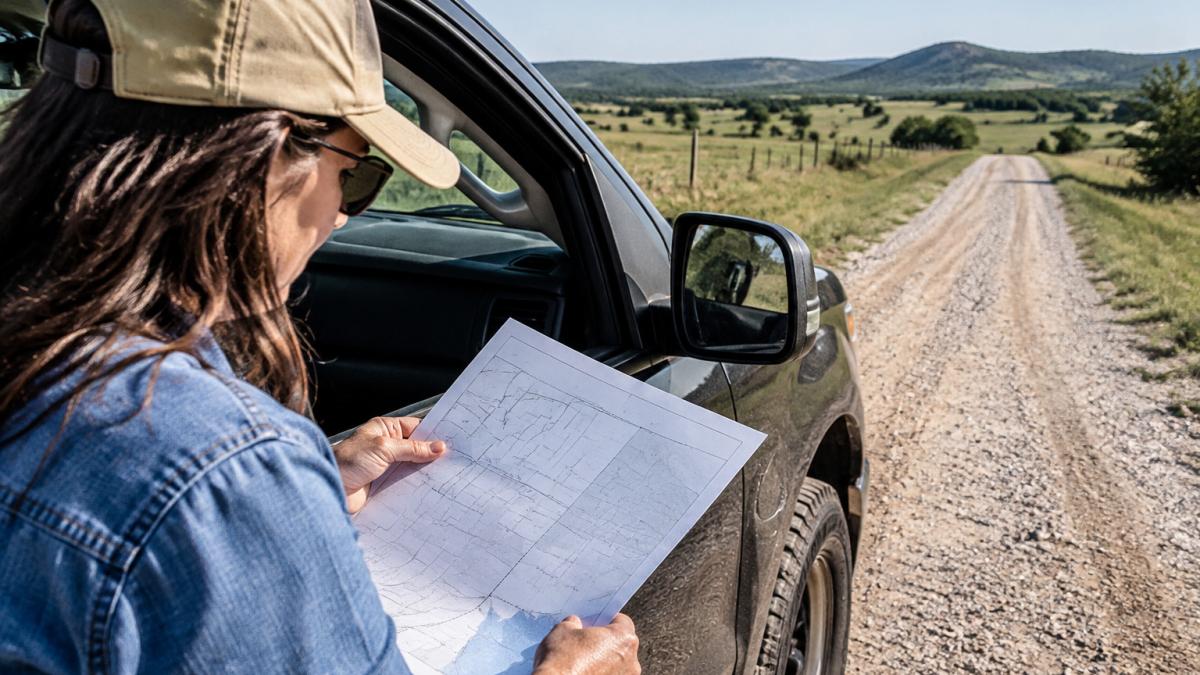
Review the survey and title documents for easements. Others are unrecorded and show up only when you walk the land or talk to neighbors. Learn how to spot hidden easements on rural property.
Ask these questions before you buy:
- Is there a recorded public or private road that reaches the property?
- Are there any easements listed in the title commitment?
- Does the access road cross another owner's land?
- Who maintains the road, and is there a shared-use agreement?
Ask your agent or title company to help you request copies of recorded easements from the county clerk's office.
Using a Land Survey to Confirm Property Boundaries
A survey shows the exact boundaries of the land, along with fences, structures, roads and easements.
A survey can reveal encroachments, such as a neighbor's fence sitting on your land. It also confirms the acreage, which affects both price and tax treatment.
Compare the survey to the legal description in the deed.
Plan for the survey cost in your budget. A boundary problem found before closing is far cheaper to fix than one found after you own the land.
Checking Water Rights and Utilities for Rural Land
Water is often the most important factor in Hill Country land. Ask for well records and drilling logs from the Texas Water Development Board's public well database (Locating a Water Well Report).
Understand the difference between groundwater and surface water rights. Groundwater rights generally belong to the landowner, but surface water and spring rights may have their own rules.
Utilities may be far away or unavailable. Find out whether electricity, internet, cell service and natural gas reach the parcel, and what it would cost to extend them.
Closing Remotely: Steps, Costs and Your Next Move
Closing a land purchase from out of state can go smoothly when you treat the title company as your local coordinator and plan the signing logistics before the closing date. The steps below are the ones that matter for an absent buyer.
Choose the title company before you choose the closing date
Ask for a title company that writes in the county where the land sits and that handles rural acreage routinely. Confirm in writing whether it offers remote online notarization (RON), whether it will courier original documents to you, and who your closing contact is.
Sequence the signing and funding
- Sign the purchase contract only after your due diligence contingencies are satisfied or you have decided to waive them in writing.
- Open escrow with the title company and confirm the earnest money amount and deadline.
- Receive and review the closing disclosure or settlement statement at least three business days before closing.
- Sign through a mobile notary where you live, or through the title company's RON platform if available.
- Wire funds only after you have verified instructions by phone using a number you looked up independently.
- Confirm recording and receive the filed deed and title policy.
Treat wire instructions as a fraud target
Wire fraud is the single most common way remote land buyers lose money at closing. Criminals intercept email threads and send fake wiring instructions that look like they came from the title company. Verify every wire instruction by calling the title company at a number you found on its own website or in your independent records, never a number from an email. Ask the title company for its written wire-fraud policy.
Budget the closing costs realistically
Ask the title company for an itemized estimate early. Typical line items include the owner's title policy premium, lender's policy if you finance, escrow and closing fees, recording fees, and any survey or inspection costs you are rolling into closing. On rural acreage, title premiums and endorsements can run higher than on a suburban lot because of access and survey issues, so get the number in writing rather than estimating from a percentage.
After recording
Once the deed is recorded, set up your property tax account with the county appraisal district, confirm your insurance is bound, and arrange any utility service you need. Then schedule a first visit to walk the boundaries with your survey in hand and confirm the fences, gates, and access match the documents. If you are ready to take the next step, connect with Monica Allison, realtor, to talk through your search and your budget.
Frequently Asked Questions
Can I buy land in Texas without visiting it in person?
Yes. Many buyers purchase Texas land remotely by working with a local buyer's agent, a title company and a licensed surveyor who can walk the property. Start with aerial imagery, county appraisal district records and a recent survey. Then arrange a live video walkthrough, a drone or thermal drone survey if available, and a local site visit by a trusted representative before you commit. Confirm that the agent represents you, not the seller, and that the title company can handle closing by mail or in a local office.
What should I check before buying rural land remotely?
Check the legal description, recorded deed, mineral reservations, existing easements, deed restrictions and any agricultural or wildlife valuation that could change if you use the land differently. Confirm legal road access in county records, verify water options such as a well or water rights, and review flood maps and septic feasibility. A title commitment and survey reviewed by an attorney or title professional will flag problems that photos and listings never show.
How can I verify road access to a rural property?
Ask the title company for a title commitment that shows recorded access easements, and compare the legal description to county road maps. Confirm the road is public or that a recorded easement runs to the parcel. Ask the seller for any road maintenance agreements. Have the surveyor show the access route on the plat, and confirm there is no gate or private barrier without written permission.
What due diligence should I do before buying raw land?
Order a current survey, a title search and commitment, and a review of mineral and surface rights. Check zoning or deed restrictions, flood and wetland maps, soil and percolation potential for septic, and utility availability. Budget for closing costs, property taxes and any necessary permits. Keep your offer contingent on satisfactory results from these reviews.