 blog
How to Avoid Costly Rural Acreage Buying Mistakes
Last Updated: November 14, 2026
Quick Summary
The most common pitfalls when buying rural acreage are legal access gaps, water and septic limits, zoning restrictions, and hidden costs. Buyers should confirm recorded access, well yield, perc test results, and a full budget before making an offer on any rural acreage.
- Confirm that access is recorded in county records, not just used informally.
- Ask for perc test results and have a licensed installer review them before closing.
- Get a written well drilling estimate that accounts for the possibility of a dry hole.
- Contact the county planning office to confirm what is permitted on the parcel.
- Build a budget covering the first three years of ownership before making an offer.
Table of Contents
- Pitfall 1 to 3: Access, Easements and Title Gaps
- Pitfall 4 to 6: Water, Septic and Utilities
- Pitfall 7 to 9: Zoning, Buildable Area and Hidden Costs
- Rural Land Buying Checklist and Due Diligence Timeline
- Professionals to Hire Before You Close on Acreage
- Schedule Your Acreage Due Diligence Consultation With Monica Allison
- Frequently Asked Questions
Buying rural acreage in the United States is one of the largest financial decisions many families make, and it is easy to get wrong. Buyers and sellers in the Texas Hill Country run into the same mistakes again and again when working through these transactions. The most common pitfalls when buying rural acreage are rarely dramatic. They are quiet gaps in access, water, zoning and cost that surface only after the closing papers are signed.
Most buyers focus on the view, the acreage count and the price per acre. Those matter, but they are the easy part. The harder questions involve whether you can legally reach the land, whether a well or septic system will work, and whether the parcel can support the use you have in mind. Overlooking these details is the root of most costly mistakes.
Rural land also differs from a typical suburban home in ways that catch buyers off guard. A house comes with utilities, a recorded road and a clear building history. Raw land may have none of these. A seller can describe a parcel as "accessible" while the only route crosses a neighbor's property with no recorded easement. A listing can call a lot "buildable" without noting that the soil fails percolation testing.
These details are easy to miss for three reasons:
- Listings are written to sell, not to inform. Photos show the best angle and season.
- Buyers rarely see the land in every condition. A dry creek looks harmless in July and floods in April.
- Paperwork is dense. Titles, surveys and deed restrictions are written in technical language most buyers do not read closely.
The sections below walk through nine specific pitfalls, grouped by theme. Each one includes what to check and how to verify it before you commit.
Pitfall 1 to 3: Access, Easements and Title Gaps
Legal access is the first thing to confirm, and it is the most frequently overlooked. Our guide to spotting hidden easements on rural property shows what to look for before you buy. A parcel with no recorded road frontage or easement may be effectively landlocked, even if you can drive to its edge (landlocked | Wex | US Law).
Confirming Legal Access Before You Make an Offer
Ask the seller for documentation showing a recorded right of way. Our article on warning signs of a landlocked parcel lists what to watch for before you make an offer. Then have a title company or attorney confirm that the access is recorded in the county records, not just used informally. Informal access can end when the neighbor sells, changes their mind or dies.
Check whether the road is public, private or a shared driveway. Private roads often carry a maintenance obligation that falls on the owners, and that cost can be significant over time. Ask who maintains the road and whether there is a written agreement.
Reading Easements and Deed Restrictions
Easements allow someone else to use part of your land, such as a utility company running power lines or a neighbor crossing to reach their property (easement | Wex | US Law). Deed restrictions can limit what you build, how many structures you place, or which animals you keep. Both are recorded, and both bind future owners.
Request a full title search and read every recorded instrument. Pay attention to restrictions on livestock, outbuildings and subdivision, since these directly affect your plans.
Pitfall 4 to 6: Water, Septic and Utilities
Water and wastewater determine whether a parcel can support a home or a working operation, and they are where rural buyers most often underestimate both the upfront cost and the ongoing obligation. Many buyers assume a well will be easy to drill and a septic system will be easy to install.
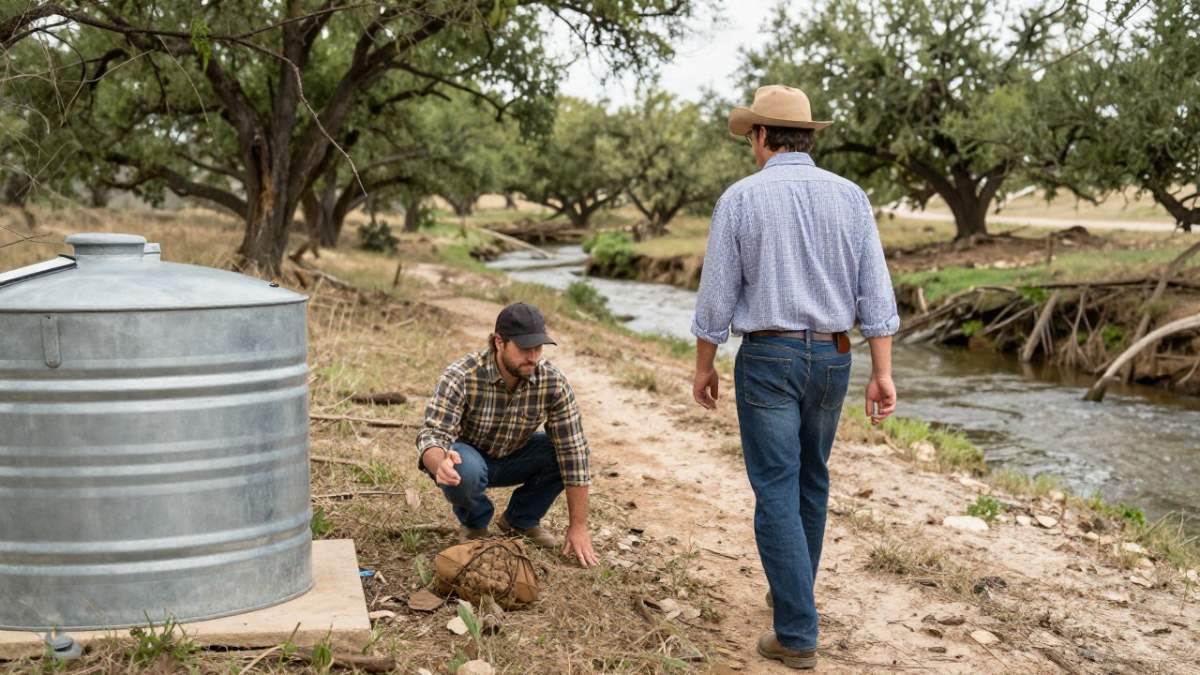
Water rights and well access. Confirm whether the property has an existing well, and if so, its depth, yield and recent test results. Our practical steps for verifying water rights on Texas ranch land walk through this before closing.
Septic suitability. A perc test measures how quickly soil absorbs water, and it helps determine whether a conventional septic system is possible. The septic permit is tied to a specific lot and soil profile, so a neighbor's approved system does not tell you about yours.
Utility connections. Power, internet and phone service are not guaranteed on raw land, and some parcels are a considerable distance from the nearest line. Contact the utility provider in writing and get an estimate for your specific parcel before you make an offer. Our breakdown of what it costs to extend utilities to raw land can help you set expectations.
Total cost of ownership. Purchase price is only the entry fee. A realistic annual budget for a rural parcel includes property taxes, insurance, road maintenance, fence repair, well pump service, septic pumping, vegetation control and any grazing lease obligations. Build that budget before you make an offer, and compare it against the cost of a parcel that already has utilities in place.
Watch out: buyers often assume a neighbor's well or septic system will carry over to their parcel, or that a shared well agreement is enforceable when it was never recorded. Each property needs its own verification, and any shared system needs a written agreement reviewed by an attorney.
Pitfall 7 to 9: Zoning, Buildable Area and Hidden Costs
The last group of pitfalls concerns what you are legally and physically able to do with the land, what it will really cost to own it, and what ongoing management obligations come with acreage that a suburban lot never imposes.
Zoning and permitted use. Many rural areas have limited zoning, but county rules may still govern building setbacks, lot sizes, septic permits and some agricultural uses. Contact the county planning office and ask what is permitted on the parcel before you assume you can build or run the operation you have in mind.
Buildable area. Acreage on paper is not the same as usable land. Steep slopes, floodplains, rock outcroppings and drainage channels can reduce the area you can actually build on. Ask for a survey that shows topography and flood zone status, and walk the land after rain. A parcel that looks flat from the road may have a seasonal creek that cuts off access or a slope that requires expensive foundation work.
Acreage-specific management obligations. This is where rural land differs most from a suburban lot. Fence repair after storms or fallen trees can be a recurring cost, and invasive plants can spread across acreage and require ongoing control. If you plan to graze livestock or harvest timber, check how the parcel is classified for property tax purposes and what the county requires to keep that classification.
Hidden costs. Plan for more than the purchase price. Common expenses include:
- Survey and title insurance
- Well drilling and pump installation
- Septic system installation and permitting
- Road grading, gravel and maintenance
- Power extension and utility hookups
- Fencing, clearing and driveway work
- Property taxes and insurance, including rural fire district fees
- Annual vegetation control, fence repair and well or septic service
Many buyers underestimate these items by a wide margin. Build a written budget that includes infrastructure and the first three years of ownership costs before you make an offer, and ask the seller for the last two years of tax bills, utility bills and any maintenance records. See where hidden costs erode a Texas raw land budget for the expenses buyers most often miss.
Rural Land Buying Checklist and Due Diligence Timeline
Use this checklist to organize your research. Work through it in roughly the order shown, since later steps often depend on results from earlier ones.
| Step | What to Verify | Who Handles It | Typical Timing |
|---|---|---|---|
| 1 | Recorded legal access and easements | Title company or attorney | Before offer |
| 2 | Title search and deed restrictions | Title company | Before offer |
| 3 | Zoning and permitted use | County planning office | Before offer |
| 4 | Survey, boundaries and buildable area | Licensed land surveyor | Before closing |
| 5 | Well yield, depth and water rights | Licensed well driller | Before closing |
| 6 | Perc test and septic suitability | Licensed septic installer | Before closing |
| 7 | Utility availability and extension cost | Utility provider | Before closing |
| 8 | Flood zone and drainage review | Survey and site visit | Before closing |
| 9 | Full budget including infrastructure | You, with your agent | Before offer |
Visit the property at least twice, once in dry conditions and once after rain, if possible.
Professionals to Hire Before You Close on Acreage
No single person can verify everything. These are the professionals most rural buyers should involve:
- Real estate attorney or title company: Confirms access, reviews the title and explains recorded restrictions.
- Licensed land surveyor: Establishes boundaries, identifies encroachments and maps topography and flood zones.
- Licensed well driller: Estimates depth and yield and reviews any existing well records.
- Licensed septic installer or soil evaluator: Performs or reviews perc tests and recommends a suitable system.
- Local real estate agent with rural experience: Helps you interpret listings, identify red flags and coordinate inspections.
Hiring these professionals costs money, but that expense is small compared with discovering a landlocked parcel or a failed perc test after closing.
Schedule Your Acreage Due Diligence Consultation With Monica Allison
Buying rural acreage involves many moving parts, and the right answers depend on the specific parcel. Monica Allison, realtor, works with buyers and sellers across the Texas Hill Country on farm, ranch and residential property, and can help you organize the checks above before you make an offer. Connect with Monica Allison now to talk through your plans, your timeline and the questions to ask on your next property.
Frequently Asked Questions
Is buying rural land a good investment?
Rural land can hold value and offer recreational or agricultural use, but returns depend on access, water, zoning and how you plan to use the property. Land is also less liquid than a home, so sales can take longer and require more patience. Before buying, confirm legal access, understand the carrying costs such as property taxes and maintenance, and compare the purchase price against comparable sales in the area. Monica Allison, realtor, can help you review comparable sales and talk through whether a specific parcel fits your goals. Pricing and availability vary by property, so contact Monica for current listings.
What should you avoid when buying rural acreage?
The most common mistakes are buying without confirming legal road access, skipping a title search, ignoring recorded easements and deed restrictions, and assuming a site will perc or have a usable well. Many buyers also underestimate the cost of extending utilities and building an access road. A practical rule is to verify each item in writing before you remove your contingencies. Working with a realtor familiar with rural Texas properties can help you spot these issues early.
How do you verify legal access to rural property?
Start by checking the deed and plat for a recorded easement or public road frontage. Ask the county road and bridge department whether the road is publicly maintained, and confirm whether a private road has a recorded maintenance agreement. A title company or real estate attorney can review the access easement and identify any gaps. Physically walk or drive the route, since a road on paper may be impassable in wet weather. If access crosses a neighbor's land, get the easement recorded before closing.
What should you check about septic systems and water before buying land?
Ask whether the property has a permitted septic system or whether the soil is suitable for one, which usually requires a perc test or soil evaluation by a licensed professional. For water, confirm whether a well exists, its depth and yield, and any recorded water rights. Hire a licensed well driller or water specialist if no well is present, and factor the drilling and septic installation costs into your budget.