 blog
Luxury Homes Texas Hill Country: A Buyer's Guide
Last Updated: November 17, 2026
Quick Summary
Luxury homes in the Texas Hill Country are residential properties priced at the top of their local market, typically distinguished by acreage, custom construction, privacy, and amenities such as pools, spas, and river or lake access. Listings split into distinct tiers, including estate and ranch properties, gated-community custom homes, and lakefront retreats, each with its own price band and trade-offs.
- Pull recent sold comps, not active listings, to see what buyers actually paid.
- Separate land value from improvement value on acreage properties using county appraisal records.
- Confirm what water the land carries, since wells, shared supply, and surface rights are not interchangeable.
- Build a five-year ownership budget covering taxes, insurance, well and septic upkeep, and road maintenance.
- Rank communities by drive time, water access, and lot size before scheduling tours.
Table of Contents
- Luxury Homes Texas Hill Country for Sale: What's Actually on the Market
- Luxury Homes Texas Hill Country Price: How Buyers Should Read the Numbers
- Texas Hill Country Luxury Homes with Acreage: Land, Privacy, and Practical Limits
- Kerrville Real Estate: A Practical Look at One Hill Country Market
- Comparing Hill Country Towns and Communities Before You Commit
- Ownership Costs Beyond the Listing Price
- Due Diligence for Acreage, Ranch, and Waterfront Properties
- Connect with Monica Allison Before Your First Tour
- Frequently Asked Questions
Luxury Homes Texas Hill Country for Sale: What's Actually on the Market
The Texas Hill Country luxury market rewards buyers who know how to read it. Monica Allison works this market, and the first thing buyers should understand is that "luxury homes Texas Hill Country" listings are not one category.
Here is what buyers commonly encounter:
- Estate and ranch properties on large acreage, often with barns, guest houses, and fenced pasture
- Custom homes in gated communities, built to the owner's specification
- Lakefront and waterfront properties near the Highland Lakes
- Vacation homes and riverside retreats bought as second residences
- Turn-key getaway properties for retirees who want low maintenance
Property photos and listing details only tell part of the story. A buyer scanning homes for sale should expect to see bedrooms, bathrooms, acreage, pool and spa features, and outbuilding counts on every listing. What the photos rarely show is why a property is priced where it is.
That gap is where most buyers get surprised. Below, we break down how to read the numbers, what acreage really costs you, and how to compare communities before you commit.
Luxury Homes Texas Hill Country Price: How Buyers Should Read the Numbers
Most listing pages show an asking price and stop. That is not a market read.
Start with the broad tiers. Luxury pricing in the Hill Country is generally discussed in recognizable bands rather than a single continuum:
- Entry luxury custom homes in gated communities and established subdivisions, typically on smaller lots with community amenities
- Mid-tier estate homes on several acres, often with a pool, outdoor kitchen, and detached guest quarters
- Upper-tier ranch and acreage properties where land value, water, and outbuildings drive a meaningful share of the price
- Waterfront and lakefront premiums near the Highland Lakes, where frontage and dock rights can push a property well above comparable inland homes
Those bands are not fixed dollar figures. They shift by county, by school district, and by how much usable land a tract carries.
The listing price is an opening position, not a valuation. In the luxury tier, sellers often anchor high and expect negotiation, especially on properties that have sat through a season.
Here is how to read a price in four passes:
- Pull recent sold comps, not active listings. Active listings tell you what sellers hope to get. Closed sales tell you what buyers actually paid. Ask for recent comparable sales in the same submarket, adjusted for acreage, water, and finish level.
- Separate land value from improvement value. On acreage properties, the house and the land are two different assets. A county appraisal district record will show you how the land has been classified and taxed, which is a useful cross-check on what the seller believes the dirt is worth.
- Price the water. A well, a shared water supply, and surface water rights are not interchangeable, and neither are lakefront, riverfront, and creek frontage. Water access carries a scarcity premium that inland comps will not capture.
- Adjust for condition and age of systems. Roof, HVAC, well pump, and septic age all affect replacement cost. A home priced at the top of its band with aging systems is not the same value as a similarly priced home with recent updates.
Watch out: comparing a lakefront home to an inland estate on price alone is a common mistake.
A dated, sourced snapshot beats a vague range. Before you make an offer, ask your agent for a written comp analysis that shows the sold date, acreage, water access, and condition adjustments for each comparable.
Texas Hill Country Luxury Homes with Acreage: Land, Privacy, and Practical Limits
Acreage delivers the privacy most buyers are chasing, but it also delivers obligations. The practical limits show up fast.
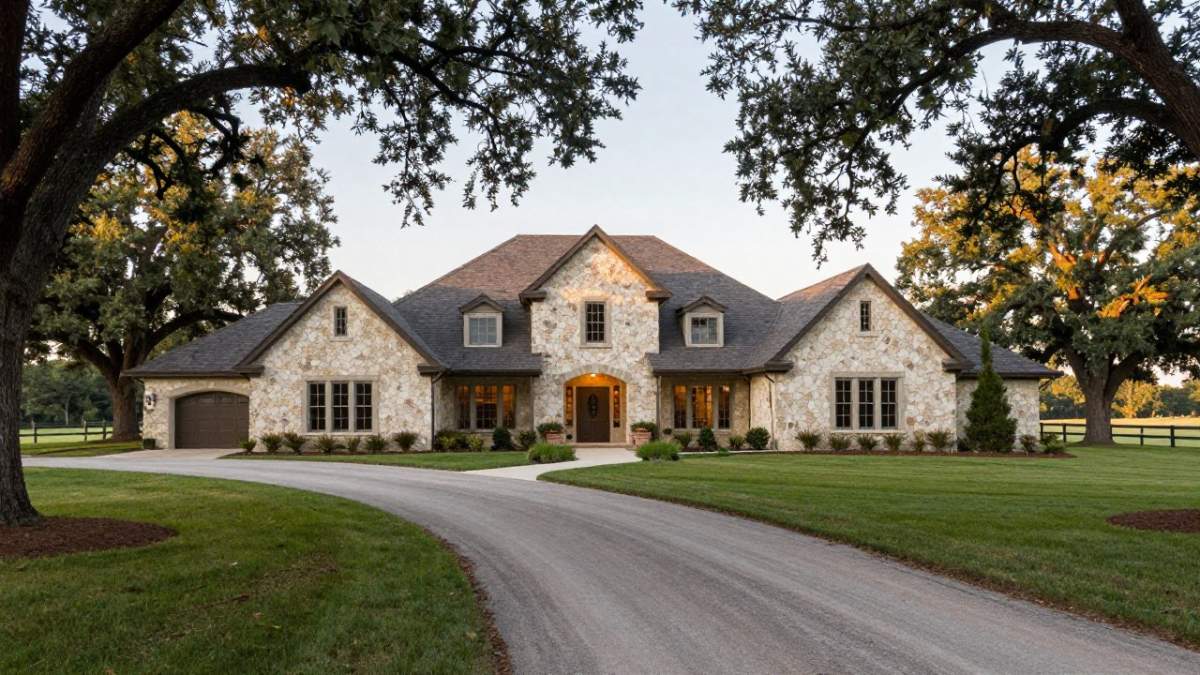
Water is the first limit. A property may have a well, a shared water supply, or surface water rights, and those are not interchangeable.
Access is the second. An easement across a neighbor's land is common in rural tracts. It is also the item most likely to cause a title problem later.
Terrain is the third. Steep, rocky ground looks dramatic in photos and limits what you can build, fence, or graze.
For buyers who want land as an investment as well as a home, our guide to buying investment acreage in Texas Hill Country walks through the questions to ask before you commit.
Kerrville Real Estate: A Practical Look at One Hill Country Market
Kerrville real estate illustrates how local a Hill Country market can be. The town sits at the edge of the Hill Country with river frontage and a quieter pace than the eastern communities closer to Austin.
Buyers drawn to Kerrville tend to want three things: space, services, and a shorter drive to everyday errands than a remote ranch allows. That combination makes it a common choice for retirees and for families who want acreage without full isolation.
What most guides miss is that Kerrville's inventory splits sharply between in-town homes and rural tracts on the outskirts. Those are different purchases with different due diligence. An in-town home comes with municipal services and neighbors.
Ask which one you are actually shopping for before you tour. It changes your budget, your timeline, and your inspection list.
Comparing Hill Country Towns and Communities Before You Commit
The community often decides more about daily life than any single property feature, and the differences between towns are concrete enough to compare directly.
Use this framework to rank the places you are considering:
| Community | Lifestyle Fit | Access and Drive Time | Typical Property Types | Trade-Off |
|---|---|---|---|---|
| Boerne and the eastern corridor | Commuters, families who want school access and town amenities | Closest to San Antonio and Austin employment centers | Gated-community custom homes, small acreage tracts | Higher prices, more traffic, tighter lot sizes |
| Fredericksburg area | Culture, hospitality, wineries, and buyers who want acreage with a town center | Longer drive to a major metro, strong weekend draw | Estate homes, ranch tracts, vacation rentals | Tourist-season congestion and short-term-rental pressure |
| New Braunfels and the river towns | Water access, family activity, walkable amenities | Convenient to both metros via the interstate corridor | Riverfront homes, established neighborhoods, tighter lots | Busier, less privacy, higher premiums near the water |
| Kerrville and the western side | Space, services, and a quieter pace with a hospital and medical community | Longer drive to a metro, easier everyday errands than a remote ranch | In-town homes and rural tracts on the outskirts | Inventory splits sharply between municipal-service homes and well-and-septic tracts |
| Highland Lakes and Horseshoe Bay | Lakefront living, boating, community amenities | Scenic but winding drives; amenity access varies by subdivision | Waterfront homes, golf-community properties, second homes | Waterfront premiums and HOA rules that govern docks, short-term rentals, and exterior changes |
Three priorities should drive your ranking before you tour: drive time to work or family, water access, and lot size. Whichever ranks first will eliminate half the map for you.
Then go a level deeper on property type. An in-town home in Kerrville or Boerne comes with municipal services and neighbors.
Watch out: a community that looks ideal on a weekend visit can feel isolated on a weekday morning.
Ownership Costs Beyond the Listing Price
The purchase price is the beginning of the budget, not the end of it. Rural and luxury properties carry costs that urban buyers often underestimate.
- Property taxes, which vary by county and by exemptions
- Insurance, higher on acreage, older construction, and waterfront exposure
- Well and septic maintenance, including testing and eventual replacement
- Road and fence upkeep on private or shared access
- Utility extension if the land is unimproved
For a full breakdown of the costs that surprise buyers, read our article on hidden costs on Texas raw land. If you are budgeting for a property that needs services brought in, our guide to the cost to extend utilities to raw land covers what drives that number.
A useful habit: build a five-year ownership budget before you make an offer. It changes how much house you can genuinely afford.
Due Diligence for Acreage, Ranch, and Waterfront Properties
Due diligence on rural property goes well beyond a standard home inspection. The items below are the ones that most often become a problem after closing.
- Confirm water rights and well output
- Verify access easements and road maintenance agreements
- Check for floodplain on any waterfront acreage
- Review title for mineral severances and encumbrances
- Inspect fencing, gates, and outbuildings
- Confirm septic capacity and permitting
- Ask about hunting leases or grazing agreements in place
Water rights deserve particular attention. Our guide on how to verify water rights on Texas ranch land explains the records to request and the questions to put to the seller. For a broader checklist of pitfalls, see how to avoid costly rural acreage buying mistakes.
The U.S. Department of Agriculture publishes resources on rural property and land management that are worth reviewing before you sign. County appraisal district records are also public, and they will tell you how the land has been classified and taxed.
Connect with Monica Allison Before Your First Tour
The Hill Country rewards buyers who do their homework, and it punishes those who skip it. Water rights, easements, terrain, and ownership costs decide whether a property is a good deal long before the asking price does.
Monica Allison works in both the residential and farm and ranch sides of real estate in the Texas Hill Country.
If you are ready to move from browsing listings to touring properties, start the conversation early. The best properties in this market rarely wait, and the buyers who win them are the ones who understood them first.
Connect with Monica Allison now.
Frequently Asked Questions
How much do luxury homes in the Texas Hill Country cost?
Pricing varies widely by town, acreage, water access, and finish level, so there is no single figure that applies across the region. Homes on smaller lots near a town core sit in a different bracket than gated acreage properties or lakefront estates. Rather than shop by a headline number, ask for recent comparable sales in the specific community you like and compare price per square foot alongside land value. Contact Monica Allison for current pricing or a quote for the areas you are considering.
Are there luxury homes in the Texas Hill Country with acreage?
Yes. Many buyers specifically want Texas Hill Country luxury homes with acreage for privacy, horses, or recreational use. When you tour, confirm the actual usable acreage, whether it is fenced, and how the land is classified for tax purposes. Ask about access easements, water wells, and septic systems rather than assuming city utilities reach the property. Acreage also changes your insurance and maintenance budget, so factor those costs in before you make an offer.
What should buyers look for in a luxury home in the Texas Hill Country?
Start with the things you cannot change: location within the community, orientation and views, water access, and how the lot sits relative to neighbors. Then review the structure, roof, well and septic if applicable, and any HOA or deed restrictions. Ask for a seller's disclosure and a recent survey. For rural parcels, check easements and title early. A property that fits your daily routine and long-term plans matters more than a long amenity list.
Which Hill Country town is best to live in?
There is no universal best town, only the best fit for your routine. Boerne and New Braunfels suit buyers who want more services and shorter drives to larger metros. Fredericksburg appeals to those who value a walkable downtown and wine country. Kerrville and the Highland Lakes communities draw buyers who want water access and quieter surroundings. Spend a weekend in two or three towns, drive your commute, and visit the grocery store before deciding.