 Ultimate guide
Texas Ranch Land Agricultural Exemption Explained
Last Updated: November 8, 2026
Quick Summary
A Texas agricultural exemption is a property tax classification that values land by what it produces rather than its market value, so working ranch land can carry a much lower taxable value. Nothing is actually exempted; the land is still taxed, just on a productivity value. Your county appraisal district applies the rules and sets its own standards.
- Land must be devoted principally to agricultural use for at least five of the past seven years.
- There is no single statewide minimum acreage; each county appraisal district sets its own standards.
- File the application with the chief appraiser of the county where the land sits, not the state or tax office.
- Change of use, such as subdividing or building, can trigger rollback tax on prior years plus interest.
- An agricultural exemption does not transfer automatically; the new owner must reapply after a sale.
Table of Contents
- What a Texas Agricultural Exemption Actually Is
- Texas Agricultural Valuation Requirements and Eligibility
- Texas Ag Exemption Minimum Acreage and Local Standards
- The Texas Ag Exemption Application Form and Filing Steps
- Texas Ag Exemption Rollback Tax and Change of Use
- Due Diligence When Buying Ranch Land With an Exemption
- Connect With Monica Allison Before You Buy or Sell
- Frequently Asked Questions
What a Texas Agricultural Exemption Actually Is
A Texas agricultural exemption is a property tax classification that values land according to what it produces rather than what it would sell for. The difference matters: agricultural appraisal, also called open-space appraisal, can pull taxable value far below market value on working ranch land. This guide explains how the agricultural exemption works for Texas ranch land, from eligibility through rollback tax.
Here is the first thing most buyers get wrong. The word "exemption" is a misnomer. Nothing is exempted. The land is still taxed, just on a productivity value instead of a market value. The Texas Property Tax Code sets the framework, and your county appraisal district applies it.
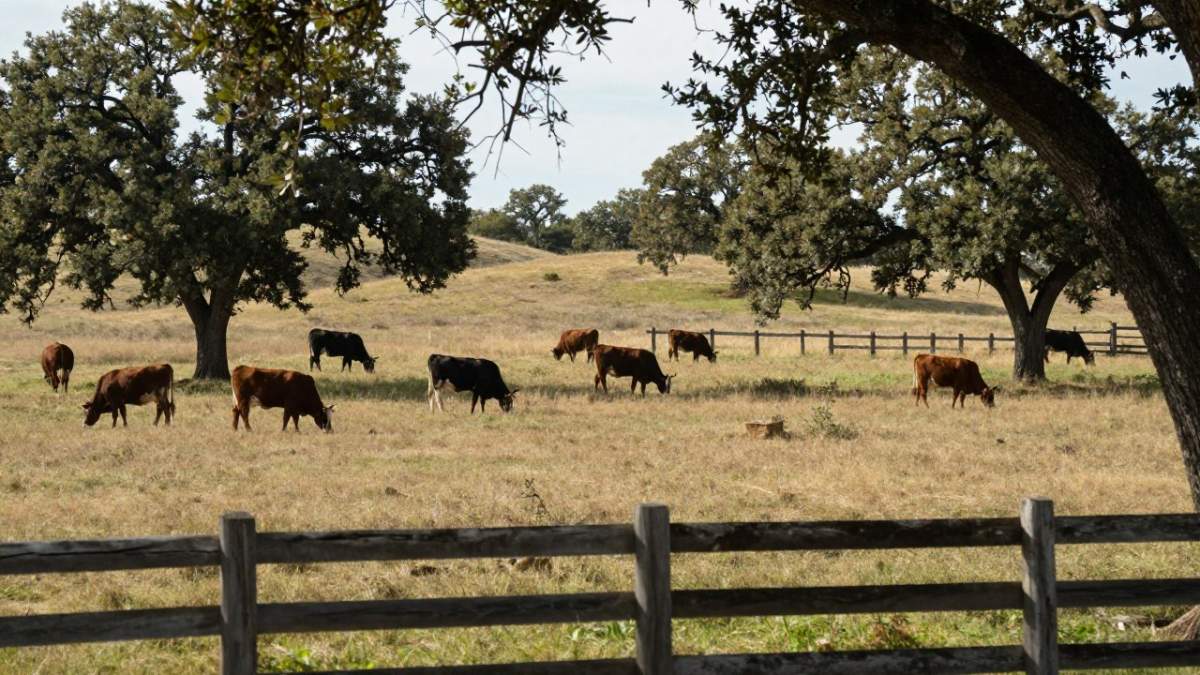
The practical effect is significant for landowners holding large acreage. A ranch appraised on open-space value can carry a much lower taxable value than neighboring land priced for development. For the broader statutory picture, our guide to Agricultural Property Tax Exemptions: A Texas Guide walks through the statewide rules.
Texas Agricultural Valuation Requirements and Eligibility
Texas agricultural valuation requirements come down to three tests: the land must be devoted primarily to agricultural use, it must have been used that way for the required period, and it must meet the degree of intensity standard your county applies. Miss any one and the chief appraiser will deny the application.
The Five-of-the-Past-Seven-Years Use Rule
The five-of-the-past-seven-years rule is the timeline test. Land must have been devoted principally to agricultural use for at least five of the seven years preceding the application (Agricultural, Timberland and Wildlife Management Use Special Appraisal). A property used for cattle through most of that window qualifies even if the current owner only recently took title, provided the use history is documented. This is where land-use history and prior agricultural leases become valuable evidence.
Qualifying Agricultural Uses and Activities
Qualifying agricultural uses include cattle grazing, crop production, hay production, beekeeping, and timber production. Each activity carries its own intensity expectation. A common mistake is assuming a small herd automatically qualifies; the appraisal district looks at carrying capacity relative to acreage. If you plan to qualify through livestock, our guide on managing livestock on small Texas acreage covers the practical side.
The eligibility rules come down to a few tests the chief appraiser applies to every application.
| Requirement | Standard | Note |
|---|---|---|
| Primary use | Land devoted primarily to agricultural use | Must meet the county's degree of intensity |
| Use timeline | Five of the past seven years | Use history and prior leases are evidence |
| Qualifying uses | Cattle grazing, crop production, hay, beekeeping, timber | Each activity carries its own intensity expectation |
| Livestock test | Carrying capacity relative to acreage | A small herd does not automatically qualify |
| Local standards | Set by each county appraisal district | Vary widely; ask for written intensity guidelines |
Texas Ag Exemption Minimum Acreage and Local Standards
There is no single statewide Texas ag exemption minimum acreage. Each county appraisal district sets its own acreage and degree-of-intensity standards, and those standards vary widely across the state. A tract that qualifies in one county may fall short in the next.
What most guides miss is how much the local standard drives the answer. The chief appraiser evaluates whether the land is used to the degree typical for that agricultural category in that area. Small parcels can qualify for certain uses, particularly beekeeping or specialty crops, while cattle operations generally need more ground to show real carrying capacity. Ask your county appraisal district for its written intensity guidelines before you buy. Watch out: assuming a neighboring county's standard applies is one of the most common reasons applications get denied.
The Texas Ag Exemption Application Form and Filing Steps
The Texas ag exemption application form is filed with the county appraisal district, and timing decides everything. Filing deadlines are set by each county appraisal district, so confirm the current deadline with yours. Confirm current deadlines and forms with your appraisal district, since procedures can change.
The core form is the application for agricultural appraisal, which your district can provide along with its intensity guidelines. File it with the chief appraiser of the county where the land sits, not the state, not the tax office. If the property spans two counties, file in each.
- Request the application and the district's written degree-of-intensity guidelines. Ask specifically for the standards for your agricultural category (livestock, hay, crops, beekeeping, wildlife management), because the district may apply different thresholds to each.
- Gather supporting documentation keyed to the activity you are claiming. For a cattle operation, that means lease agreements, brand registration or herd records, purchase and sale receipts for livestock, hay or feed receipts, and photos of fences, water sources, and stocking density. For hay or crops, keep harvest records, seed and fertilizer receipts, and equipment records. For beekeeping, keep hive counts, registration with the state apiary program, and honey-sale receipts. For wildlife management, the district will typically require a written management plan tied to a qualifying wildlife use.
- Complete the application describing each agricultural use, the acreage devoted to it, and the history of use for the five-of-the-past-seven-years window.
- File by the deadline with the chief appraiser. Keep a dated copy of everything you submit.
- Respond promptly to any request for additional evidence. Districts commonly issue a written request with a short response window; missing it can convert a fixable application into a denial.
- If denied, read the notice carefully. It will state the reason and the protest deadline. Protest deadlines are set by statute and the district, so check the protest window stated on the notice and request a hearing before the appraisal review board if available. Bring the same evidence you submitted, plus anything that rebuts the stated reason.
Watch out: the most common denial is not a lack of agricultural activity, it is a failure to prove the degree of intensity the district expects for that category, so submit evidence that speaks directly to carrying capacity, not just to the presence of a few animals.
A separate source of confusion: the phrase "ag exemption" gets used for three different things. The 1-d-1 open-space appraisal is what most ranch owners mean. Other agricultural programs exist with different qualification rules, so confirm which one applies with the appraisal district. If a seller tells you the ranch "has an ag exemption," ask which one and get the appraisal district record in writing.
Texas Ag Exemption Rollback Tax and Change of Use
Texas ag exemption rollback tax is the catch most sellers discover too late. When land stops qualifying, the appraisal district can recoup taxes for prior years based on the difference between the agricultural value and market value, plus interest. Change of use triggers it: subdividing, building, or shifting to a non-qualifying purpose.
The mechanics matter more than the label. Rollback taxes are generally calculated for prior years under the statute, and the district can confirm the exact look-back period. For each of those years, the district takes the difference between the market value and the agricultural value, applies that year's tax rate, and adds interest.
A worked example makes it concrete. Illustrative figures show how the gap between agricultural and market value drives both the annual savings and any rollback exposure. Your district's values and the current interest rate will produce a different result, so ask the appraisal district to run the estimate before you close.
What counts as a change of use is broader than most buyers expect. Subdividing a tract, platting it for development, converting pasture to a homesite or commercial use, or simply stopping the qualifying agricultural activity long enough to fail the use test can all trigger rollback.
Watch out: a buyer who plans to build a house on a portion of an exempt ranch should ask the district how it treats a partial change of use, because some districts roll back only the converted acreage while others take a broader view.
For the other costs buyers overlook, see hidden costs of Texas raw land.
Due Diligence When Buying Ranch Land With an Exemption
Due diligence on an exempt ranch means proving the use history survives the sale. An agricultural exemption does not transfer automatically; the new owner must reapply, and continuity depends on documented prior use. Request the seller's application records, lease agreements, and agricultural receipts.
Walk the property against the stated use. Verify fence condition, water sources, and whether the stocking rate matches what was claimed. Check for easements and title issues that could interrupt qualifying use. Our checklist on what to look for when buying ranch land covers the full review.
Connect With Monica Allison Before You Buy or Sell
The gap between a ranch that qualifies and one that only looks like it does often comes down to paperwork and local standards. I work the farm and ranch side of Texas Hill Country real estate alongside residential, and I help buyers and sellers read the exemption history before money changes hands. If you are ready to hire help, here is what to look for in a ranch agent.
The exemption rules reward preparation, and the county standard is where most deals stall. Monica Allison, realtor helps buyers and sellers navigate farm and ranch transactions across the Texas Hill Country, including residential and land sales. Work with an agent who reviews exemption history, local appraisal standards, and rollback exposure before you commit. Get started with Monica Allison and buy or sell your ranch land with the tax picture clear.
Frequently Asked Questions
Can 5 acres be ag exempt in Texas?
It can, but size alone does not decide it. Texas has no statewide minimum acreage for agricultural valuation. Your county appraisal district sets a degree-of-intensity standard, and 5 acres of improved pasture or orchard can meet it in some counties while 5 acres of dry brush cannot. Check with the chief appraiser before you assume a small tract qualifies.
What qualifies for an agricultural exemption in Texas?
The land must be in agricultural production for five of the past seven years and currently devoted to a qualifying use. Common uses include cattle grazing, crop production, hay production, beekeeping, and timber. Your district can confirm which uses qualify and what ownership and income requirements apply.
How much money does an ag exemption save in Texas?
The savings depend on the gap between market value and productivity value. The savings depend on the gap between market value and productivity value, the local tax rate, and land type, so request a current appraisal estimate from your county.
How many years of agricultural use are required to qualify?
Qualification depends on a history of agricultural use and current production when you file, so confirm the specific requirements with your appraisal district. Keep lease records, receipts, and activity logs, because the chief appraiser can request documentation to confirm the history.
What happens if land no longer qualifies for agricultural valuation?
The appraisal district can impose rollback taxes. It can recover the difference between the agricultural value tax and the market value tax for prior years, plus interest, as set by statute. A change of use, such as subdividing or building a commercial operation, can trigger it. Sellers and buyers should confirm rollback exposure before closing.
How do you apply for agricultural valuation in Texas?
File the agricultural appraisal application with your county appraisal district by its stated deadline. Include the property description, your ownership details, and supporting documentation of agricultural use. Once approved, the appraisal district can request updated information in later years to confirm the land still qualifies.